Accommodation Near Kibale National Park: Find Your Best-Fit Stay
The closest-looking stay isn’t automatically the right one for your Kibale visit. The best accommodation near Kibale National Park depends on how you plan to spend your time, from chimpanzee trekking to a quieter nature-focused stay.
Camps, cottages, guesthouses, and lodges offer different ways to stay. To narrow your choices, consider your planned activities, comfort needs, group size, and preferred setting. These practical details can shape how restful your time between outings feels and how much outdoor living you want.
This guide compares common stay styles and offers a simple planning checklist. It also introduces Little Monkey Camp, one of African River Camps’ nature camps near Kibale, for travelers interested in a camp stay and locally guided nature experiences. Use the guidance to identify the kind of accommodation that suits your trip.
Key Takeaways
- Compare lodges, cottages, guesthouses, and nature camps by setting and the kind of stay you want, not rankings alone.
- Choose accommodation near Kibale National Park with your trekking schedule and park access arrangements in mind.
- Plan in sequence: set your dates, choose a stay style, align activities, then book your accommodation.
- Factor in your group size, meal preferences, and how much outdoor living suits your trip.
- Explore Little Monkey Camp as a nature-camp option, with locally guided nature experiences from African River Camps.
Accommodation Near Kibale National Park: Understand Your Stay Options
Lodge, cottage, guesthouse, or nature camp? The choice is less about finding one universally “best” stay and more about deciding what you want your days around Kibale to feel like. Accommodation near Kibale National Park can be a base for park activities or a way to spend more time in a natural setting. Your preferred level of indoor comfort, the setting you enjoy, and your planned activities can help you choose.
Kibale’s forest and wildlife are part of the experience, so the character of your stay may matter as much as its category. For context on the park’s geography, biodiversity, and conservation, see the Kibale National Park Wikipedia overview. Then consider how you’ll use your accommodation: as a place to rest between outings, a base for planned activities, or a chance to spend more time outdoors.
Stays around Kibale range from private-room lodges and cottages to guesthouses and campsites. Nature camps bring a natural setting together with hosted accommodation.
What kinds of accommodation can you find near Kibale?
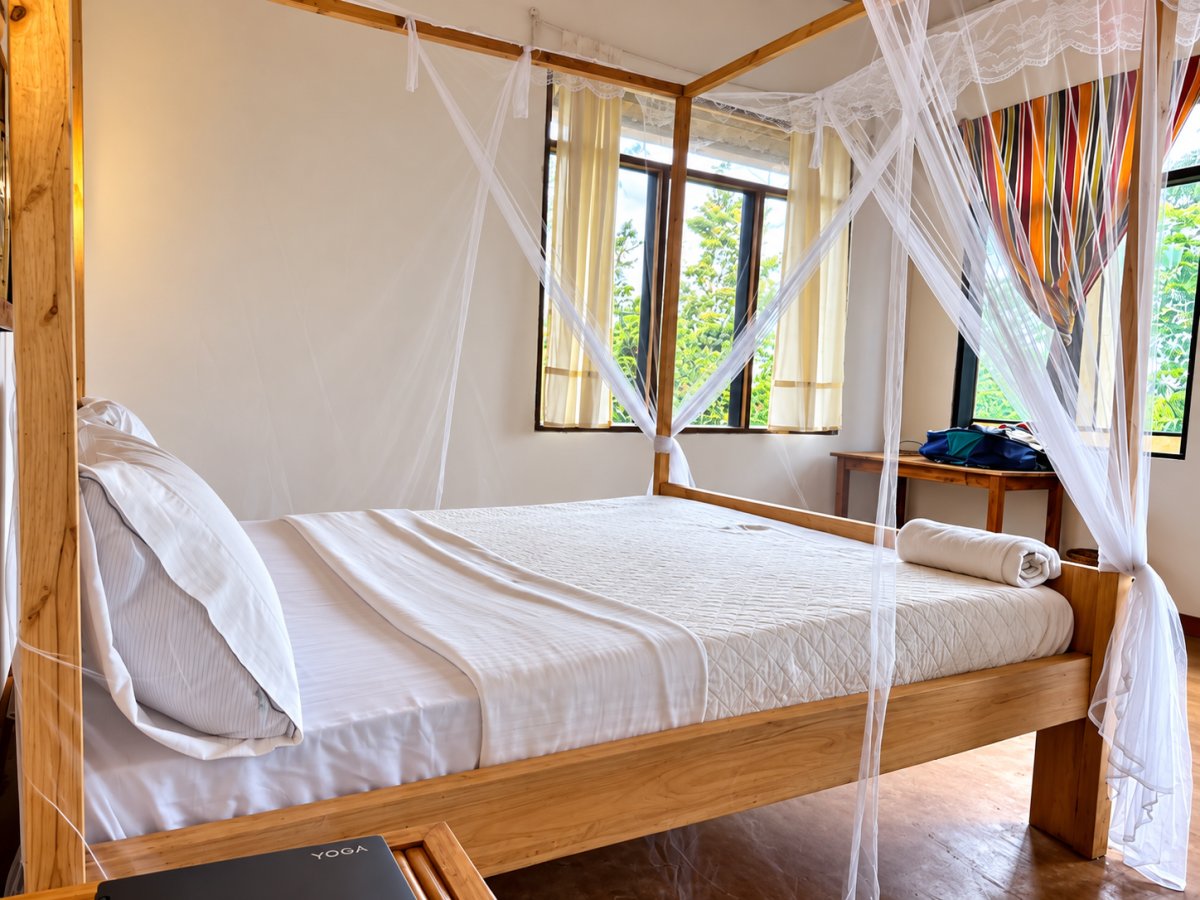
Lodges, guesthouses, cottages, and campsites describe different ways to stay, not a fixed scale of quality. A lodge or cottage may suit someone who wants a private indoor space; a guesthouse is another room-based format; and a campsite makes outdoor living part of the stay. Nature camps offer a camp setting alongside accommodation. Compare the specific features of each property rather than assuming that every place in a category is alike.
Which stay style fits your kind of trip?
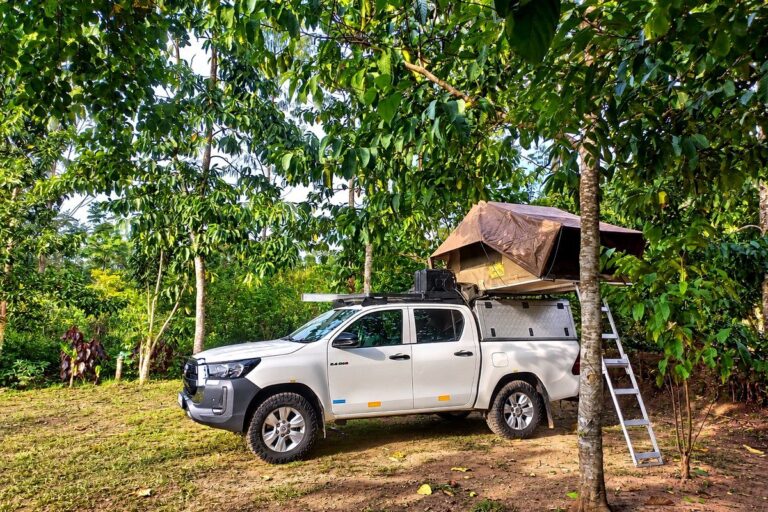
If you value an indoor place to unwind after a day out, compare private rooms and cottages. These formats can suit couples, families, or anyone who prefers an enclosed space as their main base. Camping suits travelers who want outdoor living to be part of the visit. A nature camp can offer a middle ground, combining a natural setting with hosted accommodation.
Your daily plans can help narrow the options. If you expect to spend most of your time on park activities, focus on a stay that feels comfortable for the hours you’ll spend resting and getting ready. If you want your accommodation to contribute to the trip, consider how much time you hope to spend outdoors and whether you prefer a hosted camp or a campsite.
Party size matters, too. A solo traveler may have different room needs from a family or group, while meal preferences can affect what feels convenient during a nature-focused visit. Think about how much structure you want, how much time you’ll spend indoors, and what kind of surroundings help you settle in. These preferences make it easier to compare stays on practical differences, not rankings alone.
Does Accommodation Near Kibale Make Chimpanzee Trekking Easier?
A high ranking or glowing review can help you discover a place to stay, but it doesn’t guarantee a convenient park visit. Consider where you need to go, when you need to be there, and how you’ll arrange your day. Accommodation near Kibale National Park can support a smooth visit, but the booking itself doesn’t settle trekking logistics.
Plan your Kibale stay around your confirmed activities, access arrangements, and daily schedule.
What should you consider when planning around chimpanzee trekking?
Build your accommodation decision around your confirmed trekking date and schedule. Standard chimpanzee trekking begins at the Kanyanchu Visitor Center, but the journey from your accommodation depends on its location and your destination. Compare the property location with your own route and the timing you’ve been given instead of relying on a general description or estimated distance.
Chimpanzee trekking requires a permit, which is separate from accommodation. Uganda Wildlife Authority guidance is the right source for current permit requirements and booking information. The minimum age for chimpanzee trekking is 12. Check current guidance as you plan, and make sure your accommodation dates align with your confirmed activity schedule.
How can independent travelers keep the stay flexible?
Booking a room or campsite and arranging park activities are separate parts of planning. A stay doesn’t automatically include a chimpanzee trekking permit, transport, or a confirmed safari itinerary. Independent travelers can coordinate these arrangements around their own dates and compare stays by the comfort and setting they want.
Before settling on a base, write down the essentials: your trekking date and start time, the park access point, your route plan, and any other activities you intend to arrange. Compare the accommodation location with those details. If your plans change, keeping bookings separate makes it easier to identify which arrangements need updating. A property’s general description alone won’t establish a specific travel time to the trekking point.
A nature camp can suit travelers who want a simple stay alongside locally guided nature experiences. African River Camps offers nature camp stays near Kibale at Little Monkey Camp. Plan trekking permits and access arrangements separately, and let your confirmed schedule guide your accommodation choice.
Lodge, Cottage, or Camp Near Kibale: Compare the Best Fit
Choosing accommodation near Kibale National Park gets easier when you compare how each stay style fits your trip, rather than relying on rankings or price categories alone. Think about the setting you’d enjoy returning to, how much time you expect to spend at your accommodation, and whether you prefer an indoor room or an outdoors-focused stay.
The table offers a starting point, not a rating. Terms such as “lodge” or “cottage” describe broad formats, and the exact setting, amenities, and services vary between properties. Use the style that sounds right to narrow your search, then review the specific property details.
| Accommodation style | Typical setting | May suit travelers who |
|---|---|---|
| Lodge | A hosted, room-based stay | Prefer a conventional indoor base between activities |
| Cottage | A separate, home-like accommodation format | Want a private indoor space or are planning a family stay |
| Guesthouse | A room-based stay with a more personal scale | Want a straightforward place to rest while exploring the area |
| Campsite | An outdoor-focused overnight stay | Enjoy camping as part of the travel experience |
| Nature camp | A camp setting with hosted accommodation | Value natural surroundings and guided experiences |
When might a lodge, cottage, or guesthouse suit you?
A lodge, cottage, or guesthouse may be a good fit if you want your main overnight stay to be indoors. A cottage can appeal to travelers looking for a more private or family-oriented format, while lodges and guesthouses offer other room-based choices. These labels don’t guarantee particular facilities or service levels, so compare the specific property details instead of assuming every place in a category is alike.
When might a nature camp be the right choice?
A nature camp may suit you if you want the surroundings to feel like part of your stay without making camping the only way to experience the outdoors. It brings a natural setting together with hosted accommodation, and locally guided experiences can add another way to connect with the area. African River Camps offers Little Monkey Camp as a nature-camp option near Kibale, with locally guided nature experiences.
As you compare accommodation, give equal attention to the character of the stay and the practical details that matter to you. Consider who’s travelling, how you like to spend downtime, and whether you want an indoor base, a campsite, or a hosted camp environment. Then review the amenities described for the specific property. This keeps the comparison grounded in your trip rather than someone else’s ranking.
Plan Your Kibale Stay: A Simple Accommodation Checklist
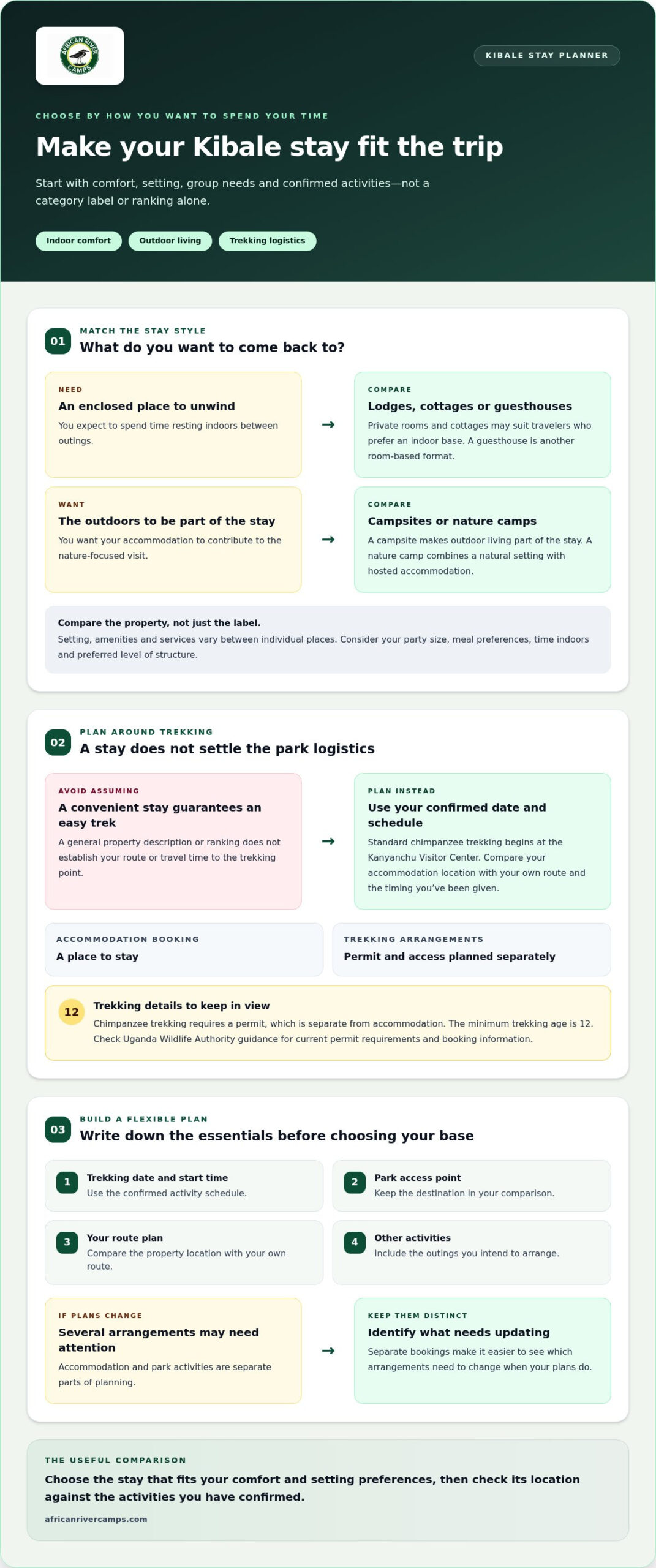
A little planning helps your accommodation support the visit you have in mind. Work through these four decisions in order so your dates, preferred stay, and park activities fit together before you book.
- Set your visit dates. Choose when you plan to travel and estimate how many nights you’ll need. Allow time for the activities on your itinerary, rather than choosing dates based only on room availability.
- Choose your stay style. Decide whether you’d feel more comfortable in indoor accommodation or camping. Consider who’s travelling, how much outdoor living you enjoy, and whether a room or campsite suits your group.
- Align your activities. Put park visits and other planned experiences alongside your accommodation dates. Chimpanzee trekking permits and transport arrangements are separate from lodging, so keep those plans distinct and follow current official guidance for time-sensitive activity requirements.
- Book your accommodation. Once the dates and stay style fit your plan, make the lodging reservation and keep its details with your activity and transport notes.
What should you decide before booking?
Start with party size and the number of nights, then think through practical preferences. Do you have dietary needs or meal preferences? How important is connectivity during the stay? What level of outdoor living feels enjoyable for everyone in your group? These questions help you compare options by how well they suit your everyday needs, not just by property type.
African River Camps offers vegetarian meals and Wi-Fi across its camps. These can be useful points to consider when comparing your needs. Think about how meal preferences and connectivity fit into your plans for the stay.
How can you keep the visit well organized?
Keep a simple plan with three separate parts: accommodation, park activities, and transport. Record the dates and booking details for each, then check for conflicts. This makes it easier to see whether your stay lines up with your activity schedule without treating the room reservation as a trekking permit, transport arrangement, or complete itinerary.
If you’re planning an outdoor-focused stay, a camping checklist can help you decide what to bring and how you prefer to camp. Keep accommodation planning separate from trekking arrangements, then coordinate both around your confirmed dates. For a nature-based option near Kibale, explore Little Monkey Camp accommodation as part of your stay comparison.
Stay at Little Monkey Camp Near Kibale with African River Camps
Little Monkey Camp offers affordable, nature-focused accommodation near Kibale National Park in western Uganda, approximately 5–7 minutes by vehicle from Kanyanchu Visitor Centre. Guests can enjoy comfortable accommodation, ground and rooftop tent camping, vegetarian meals, vegan options on request and Wi-Fi. The camp provides a convenient base for chimpanzee trekking, birdwatching, Bigodi Wetland walks and guided nature experiences. Our team can also assist with chimpanzee trekking permit arrangements, subject to availability.
Explore Little Monkey Camp accommodation or request accommodation availability for your preferred dates.
What kind of stay does African River Camps offer?
African River Camps offers nature-focused accommodation, camping and locally guided experiences across three destinations in western Uganda. Little Monkey Camp is located near Kibale National Park, Nguse River Camp serves travellers exploring the Bugoma Forest area, and Semliki Fishing River Camp provides a base for exploring the Semliki Valley. Each camp offers a different experience, allowing guests to discover Uganda’s forests, wildlife and natural landscapes.
The camps offer cottages, family accommodation, vegetarian meals, and Wi-Fi. These features can help you decide what matters most for your stay. Consider your group’s comfort needs, meal preferences, and connectivity when choosing between accommodation and camping.
How can Little Monkey Camp fit a Kibale visit?
Little Monkey Camp can be a suitable base for travelers planning a Kibale-focused trip who value a nature-based setting and a simple camp experience. Think about how you want to spend your time between park activities: you might prefer to unwind in an outdoor environment or add locally guided nature experiences to your stay. The right fit depends on your priorities, group, and preferred accommodation style.
Keep the practical pieces clear as you plan. Set your stay dates around your intended park activities, and arrange permits and transport separately from accommodation. Compare the accommodation features, meal options, and connectivity with your comfort needs, then fit the stay into your visit plan.
If a nature camp sounds right for your Kibale visit, Explore African River Camps and consider Little Monkey Camp as you plan your stay. Choose the accommodation style that feels comfortable for your group and shape the rest of your visit around the experiences you want to enjoy.
Choose a Stay That Feels Right for Your Kibale Visit
Your plans don’t need to follow someone else’s checklist. Think about the pace you want, the setting you’ll enjoy returning to, and what will help your group feel at ease after a day of exploring. These preferences can turn the search for accommodation near Kibale National Park from a long list into a more personal decision.
As you settle on your dates, consider whether a nature-camp stay fits the experience you’re hoping for. African River Camps offers accommodation, camping, and locally guided nature experiences across its camps. Little Monkey Camp is a nature-based option for a Kibale-focused trip.
Planning a visit to Kibale National Park? Stay at Little Monkey Camp and enjoy affordable accommodation, camping, fresh vegetarian meals and convenient access to chimpanzee trekking activities.
Whether you are travelling independently, as a couple, with family or on a self-drive safari, our team can help you choose accommodation that suits your travel plans.
Explore Little Monkey Camp Accommodation
Check Accommodation Availability & Book Your Stay
Frequently Asked Questions
How far is accommodation from Kibale National Park?
There isn’t one standard distance because accommodation locations and park destinations vary. Compare the property’s mapped location with the specific access point or activity destination you plan to visit, rather than relying on a broad “near Kibale” label. Use the exact locations to plan your route and allow for your own schedule.
Do I need a chimpanzee trekking permit to visit Kibale?
You need a chimpanzee trekking permit to take part in chimp tracking, but a general visit to Kibale isn’t the same as trekking. Other park activities may have their own entry requirements or fees, so check the Uganda Wildlife Authority’s current guidance for your planned activity. Confirm permit details and visit arrangements through official channels before you travel. Accommodation reservations don’t include trekking authorization.
How many nights should I stay near Kibale National Park?
Choose the number of nights based on your activity schedule, arrival and departure plans, and how much time you want for rest. A short stay may suit a focused visit with one main activity, while extra nights can leave room for other experiences or a slower pace. Consider whether your plans depend on fixed booking times, and avoid building a tight schedule around unconfirmed routes or transport.
Can I book accommodation near Kibale without a safari package?
Yes. You can arrange accommodation near Kibale National Park independently and plan activities and transport separately. This lets you choose your own dates and stay style without relying on a packaged safari itinerary. Keep a record of each reservation and make sure your lodging dates fit your activity schedule. If chimpanzee trekking is part of your plans, arrange the required permit through the official process as a separate step.
When is the best time to visit Kibale National Park?
For chimpanzee trekking, June to September and December to February are commonly identified as peak periods. April, May, and November are described as lower-season months, when trails can be wetter and more challenging. Conditions vary, so consider your comfort with muddy walking and flexible plans alongside your preferred dates. Check current park guidance before booking activities, and plan your stay around the conditions you’re prepared for.
What should I pack for a stay near Kibale National Park?
Pack for changing outdoor conditions: comfortable walking shoes, lightweight layers, rain protection, and a small day bag for essentials. Bring personal medication, any prescription details you may need, and a reusable water bottle. Keep travel documents and activity confirmations together, and protect them from rain. Let your planned activities and the season guide what else you bring, so you don’t pack specialist gear you won’t use.
Are there vegetarian meal options at nature camps near Kibale?
African River Camps offers vegetarian meals across its camps. If you have dietary needs, factor them into your stay plans. For strict dietary requirements, bring suitable snacks for travel days as well.