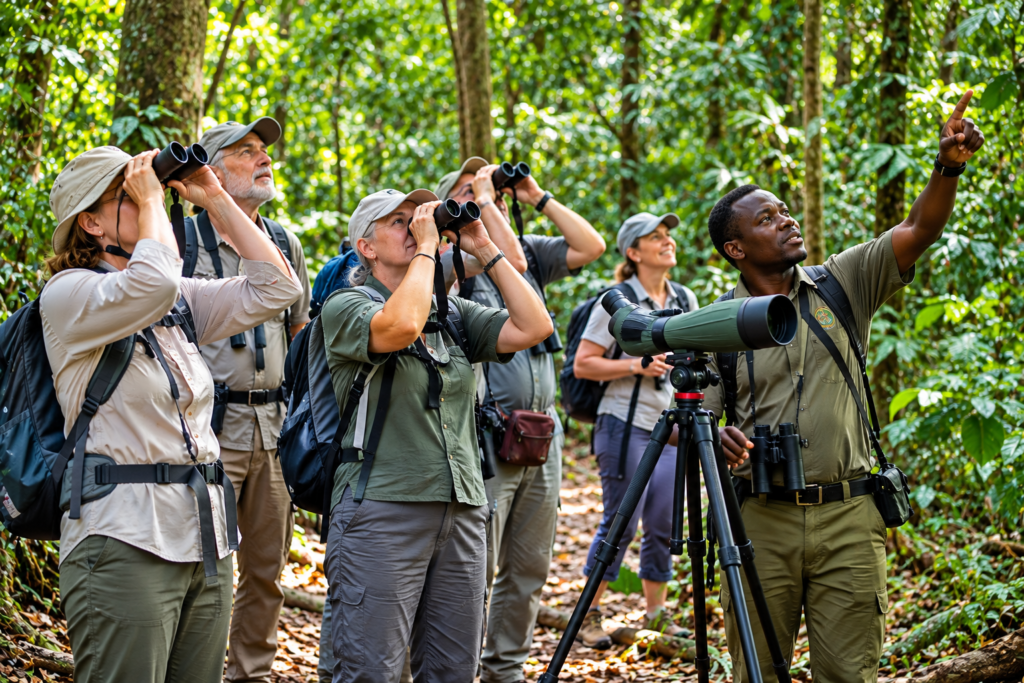
Birding in Bugoma offers travellers an opportunity to explore one of Uganda’s important tropical forest landscapes while searching for forest and woodland birds. Quiet trails, dense vegetation and surrounding habitats create rewarding conditions for birdwatchers who want to add a less-crowded nature experience to their Uganda safari.
Start early with a local guide and explore the forest while listening for calls and watching movement through the canopy. Photographers can take more time along forest edges and open sections where changing light may create better opportunities for bird photography.
Staying near the forest makes early starts easier. Nguse River Camp provides a convenient base for travellers exploring Bugoma Forest and the Hoima–Kagadi corridor.
Planning a wider birdwatching journey? Combine Bugoma with Birding in Kibale and Birding in Semliki or explore our main Birding in Uganda guide for more ideas.
Where to Go Birding in Bugoma Forest
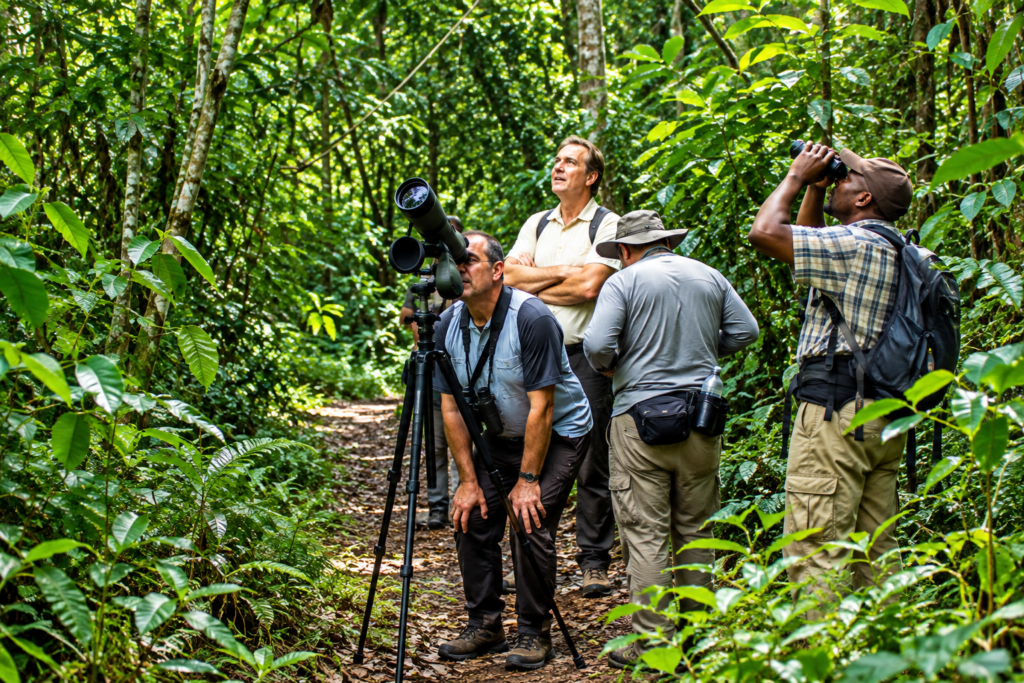
Birding in Bugoma takes visitors into tropical forest, forest edges and surrounding woodland habitats. Exploring more than one habitat gives birdwatchers a better chance to encounter different species during the same trip.
Start with a guided forest walk and allow enough time to stop when you hear calls or notice movement in the canopy. Early morning usually suits serious birders because cooler conditions make longer walks more comfortable.
Travellers who want to stay close to the area can use Nguse River Camp as a base while exploring Bugoma Forest. Its location also works well for guests travelling between Hoima, Kibale and other western Uganda destinations.
Birds to Look for in Bugoma Forest
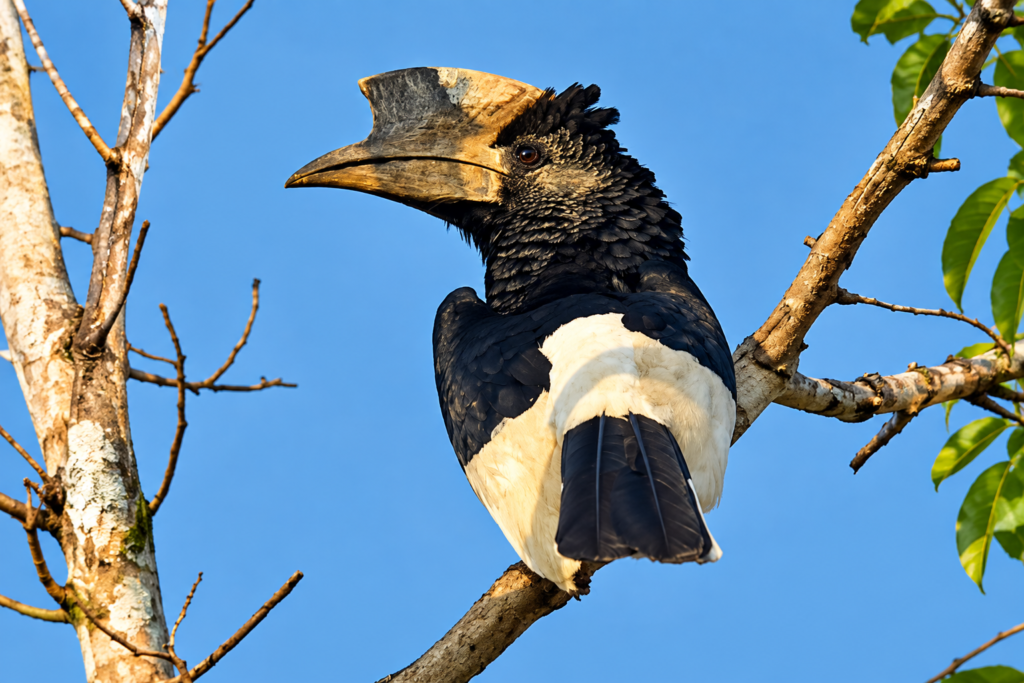
Bugoma attracts birdwatchers who enjoy searching for forest-dependent species rather than simply building a quick roadside checklist. Dense vegetation encourages visitors to slow down, listen carefully and work with an experienced guide.
Look across different forest levels, from the undergrowth to the canopy. Hornbills, turacos, barbets, sunbirds, kingfishers, flycatchers and other forest birds can form part of the wider birding experience, although sightings always depend on season, habitat and conditions on the day.
Keen birders should consider spending more than one session around the forest. Extra time gives your guide more opportunities to explore different habitats and respond to recent sightings.
For more destinations, see our complete Birding in Uganda guide.
Guided Birding Walks in Bugoma
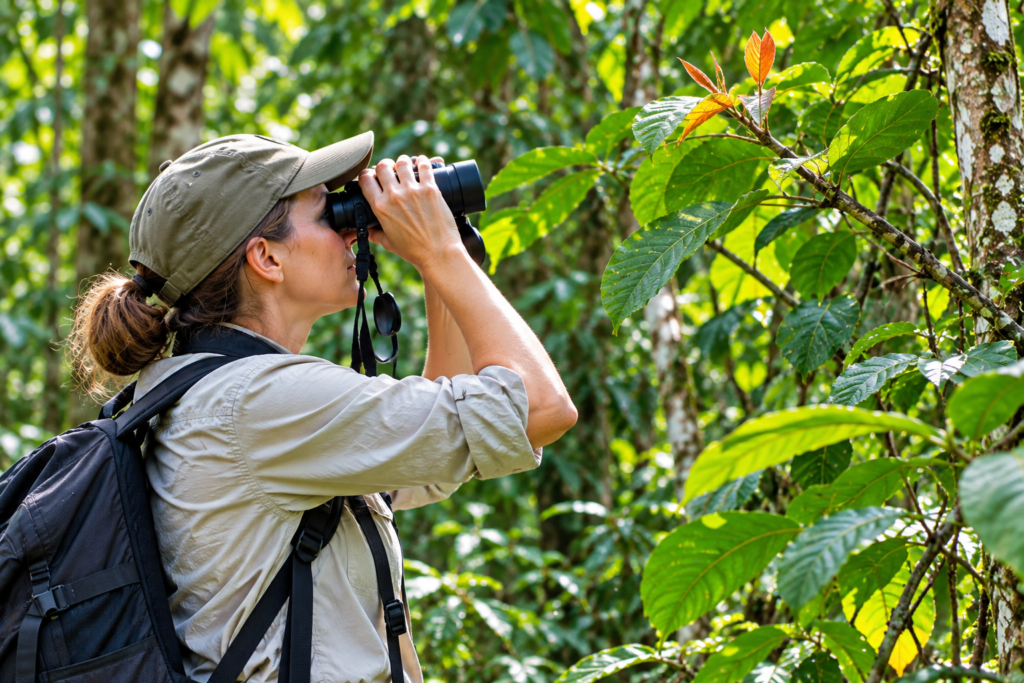
A local birding guide can help you get much more from a visit to Bugoma. Experienced guides recognise calls, understand forest habitats and know where to concentrate attention during different parts of the day.
Bring binoculars and comfortable walking shoes. Photographers should also carry suitable camera equipment while keeping their kit manageable for forest trails.
Guests can combine guided birding with other nature experiences around the area. Our Bugoma Forest Accommodation guide can help you plan where to stay before arranging your activities.
Best Time for Birding in Bugoma
Visitors can enjoy Birding in Bugoma during different months of the year, although rainfall and trail conditions can affect each experience.
Drier periods generally make forest walking and road access easier. Wetter conditions create lush scenery and can still produce rewarding birding, especially for visitors who prepare for rain and changing trail conditions.
Your ideal travel dates should also reflect the rest of your Uganda itinerary. Travellers combining several forests can continue to Birding in Kibale or Birding in Semliki for contrasting habitats and birding experiences.
Bird Photography in Bugoma Forest
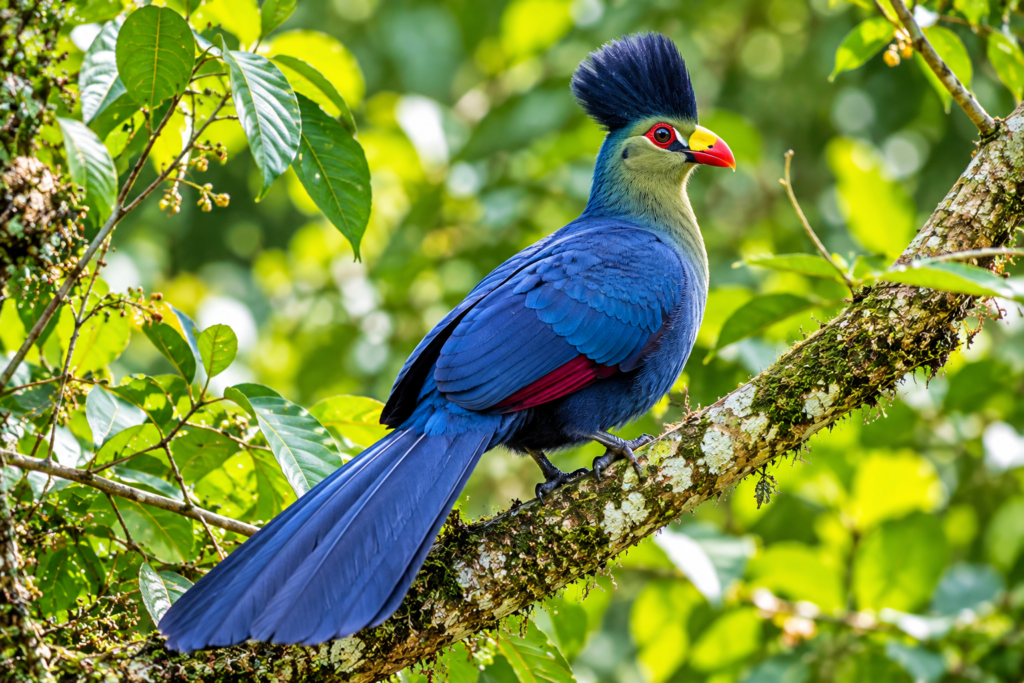
Bugoma gives photographers opportunities to capture birds within a natural forest environment. Forest photography requires patience because foliage, changing light and moving subjects can make photographs challenging.
Spend time around forest edges and openings where natural light may improve visibility. A guide can also help locate active areas without rushing the experience.
Carry spare batteries and enough memory cards if photography forms a major part of your trip. Protecting equipment against dust and rain also helps when travelling through several Ugandan destinations.
Combine Bugoma with Kibale and Semliki
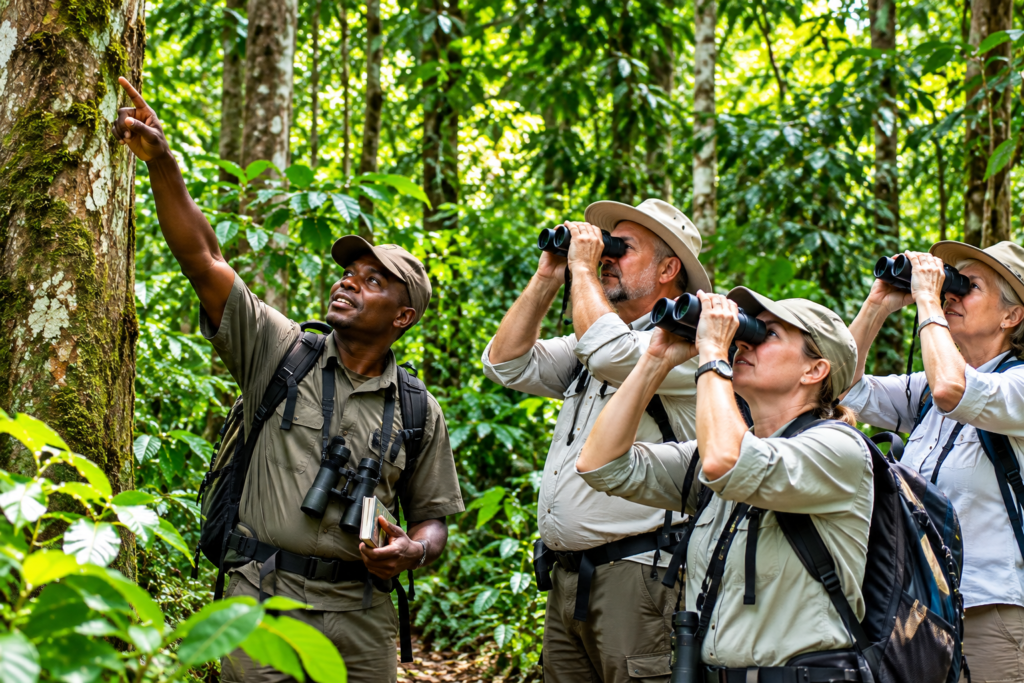
A multi-destination birding route allows visitors to experience more than one Ugandan forest landscape.
After Bugoma, continue to Birding in Kibale for another forest birding experience near Kibale National Park. Travellers with additional time can extend the journey to Birding in Semliki and explore the lowland forest environment around Semliki National Park.
This route also works well for travellers interested in primates. Our Chimpanzee Permits in Uganda guide explains how to plan chimpanzee experiences alongside your accommodation and birding itinerary.
Where to Stay Near Bugoma Forest
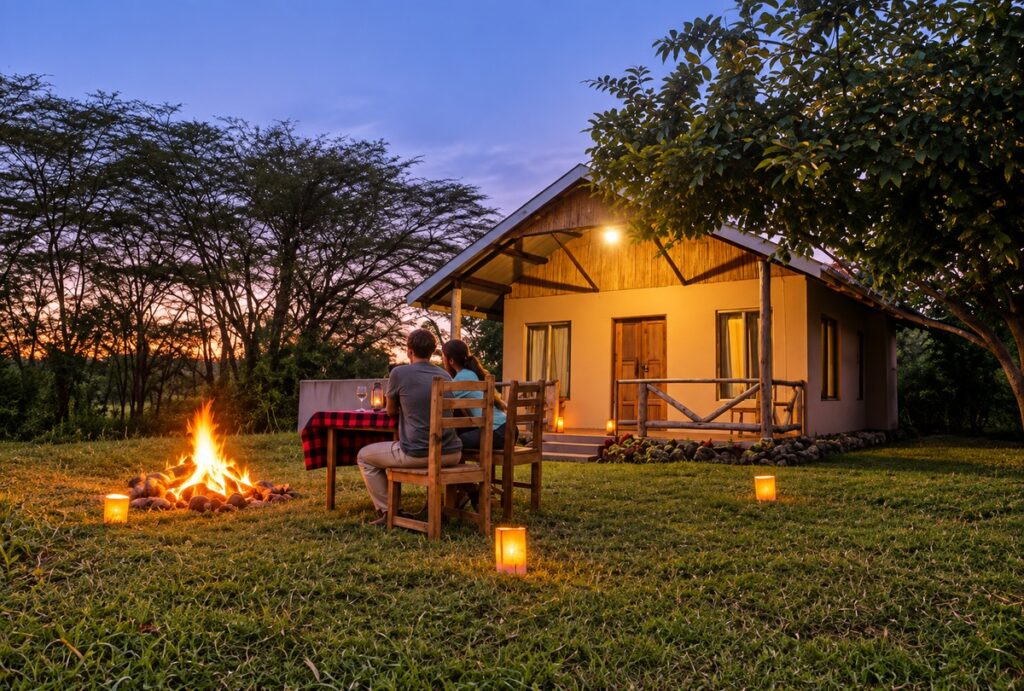
Choosing accommodation near Bugoma reduces unnecessary travel and makes early birding starts much easier.
Nguse River Camp offers accommodation and camping along the Hoima–Kagadi corridor near the Bugoma area. Guests can use the camp as a practical stop while combining forest activities with a longer Uganda journey.
Travellers who prefer camping or travel with rooftop tents can also explore our Camping in Uganda guide. It covers camping options within the African River Camps network.
For more information about planning an overnight stay in this area, visit Bugoma Forest Accommodation.
Birdwatchers can also explore Things to Do in Bugoma for more ideas, including guided forest walks, wildlife experiences, camping and nature activities.
Combine Birding with Other Nature Experiences
Birdwatching can form one part of a broader Bugoma stay. Nature walks, photography and relaxed time around the camp can create a more varied itinerary.
Travellers continuing toward Kibale can stay at Little Monkey Camp and combine birdwatching with forest experiences around Kibale National Park. Those travelling farther west can continue toward Semliki for another distinctive landscape.
A multi-camp route also works well for self-drive and overland travellers who want to explore Uganda at a slower pace.
Why Stay with African River Camps?
African River Camps connects travellers with accommodation close to forests, wildlife areas and nature experiences in Uganda.
Guests visiting Bugoma can stay at Nguse River Camp while planning birding and other activities around the forest. Our team can also help you connect Bugoma with Kibale or Semliki when you want a longer nature-focused journey.
Instead of arranging each overnight stop separately, contact us with your route and travel dates. We can check accommodation across our camps and help you organise a practical itinerary.
Frequently Asked Questions About Birding in Bugoma
Is Bugoma Forest good for birdwatching?
Yes. Bugoma’s tropical forest and surrounding habitats make the area interesting for visitors who enjoy forest birding and nature-based travel.
Do I need a guide for birding in Bugoma?
A knowledgeable local guide can improve the experience considerably. Guides help identify calls, locate birds and choose productive forest areas.
What should I bring for birding?
Bring binoculars, comfortable walking shoes, lightweight clothing, drinking water and rain protection. Photographers should carry suitable camera equipment and spare batteries.
Can beginners go birding in Bugoma?
Yes. You do not need to be an experienced birder. Tell your guide your level of experience so they can adjust the walk accordingly.
Can photographers join the birding walks?
Yes. Tell us when photography is a priority because photographers often benefit from a slower pace and more time at individual sightings.
Can I combine Bugoma and Kibale?
Yes. Combining Bugoma with Kibale creates a useful forest-focused itinerary. Read our Birding in Kibale guide when planning the Kibale section.
Can I combine Bugoma with Semliki?
Yes. Travellers with enough time can continue west and add Birding in Semliki to the itinerary.
Where can I stay near Bugoma Forest?
See our [Bugoma Forest Accommodation] page and Nguse River Camp for accommodation and camping information.
Can self-drive travellers stay at Nguse River Camp?
Yes, the camp suits travellers using the Hoima–Kagadi corridor. Rooftop-tent and camping travellers can also check our Camping in Uganda page.
How do I book?
Send African River Camps your travel dates, number of guests, accommodation preference and activities you want to arrange. We can then check the relevant options for your stay.
Book Birding in Bugoma
Ready to plan Birding in Bugoma?
Send us your travel dates, number of guests and accommodation preference, and tell us whether you want a relaxed birding experience or a more specialist birdwatching trip.
You can also ask us to combine Bugoma with Birding in Kibale, Birding in Semliki, camping or other nature experiences. If you need accommodation near the forest, we can check Nguse River Camp for your dates.