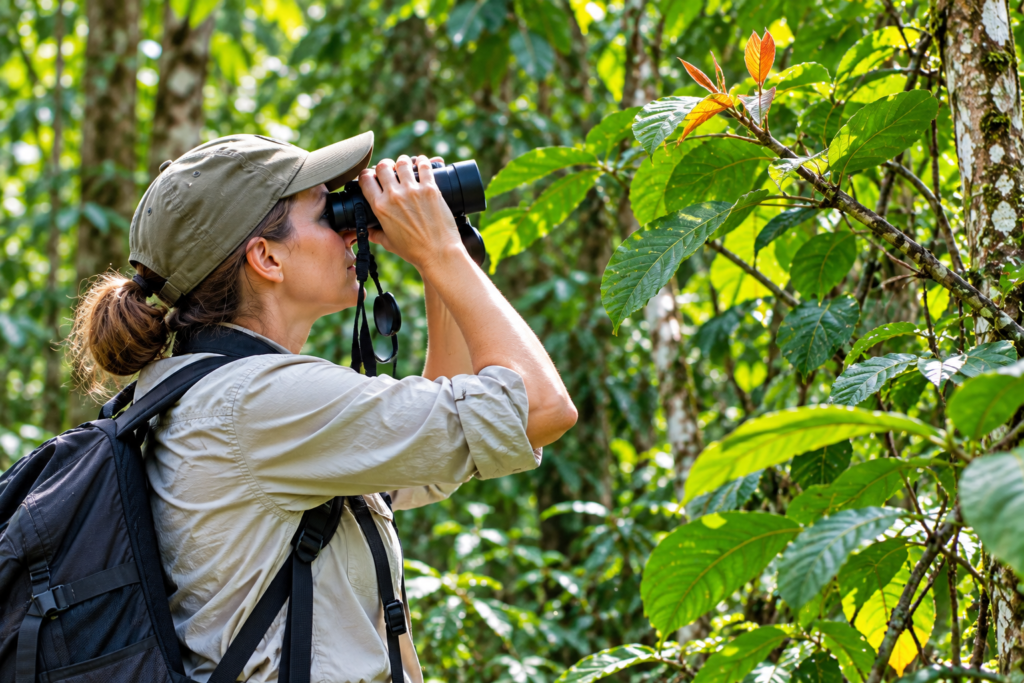
Birding in Kibale offers some of Uganda’s most rewarding forest birdwatching, with tropical forest, woodland, wetlands and nearby community habitats supporting impressive bird diversity. Kibale National Park attracts international birders, photographers and nature travellers who want to combine specialist birding with Uganda’s famous primate experiences.
Stay close to the forest at Little Monkey Camp and start early for guided birding walks around Kibale. Travellers planning a longer birdwatching journey can also explore our Birding in Uganda guide, which connects Kibale with Bugoma Forest and Semliki.
Why Choose Kibale for Birding?
Kibale National Park combines mature tropical forest with woodland, wetlands, grassland and community farmland. This variety gives birders access to different habitats within a relatively compact area.
Early mornings often provide the strongest birding opportunities as forest activity increases after sunrise. Experienced guides can help visitors locate birds by sight and call while also explaining the wider forest ecosystem.
Kibale also works particularly well for travellers who want to combine birdwatching with primate experiences. Read our guide to Chimpanzee Tracking in Kibale National Park when planning both activities.
Birds to Look for in Kibale National Park
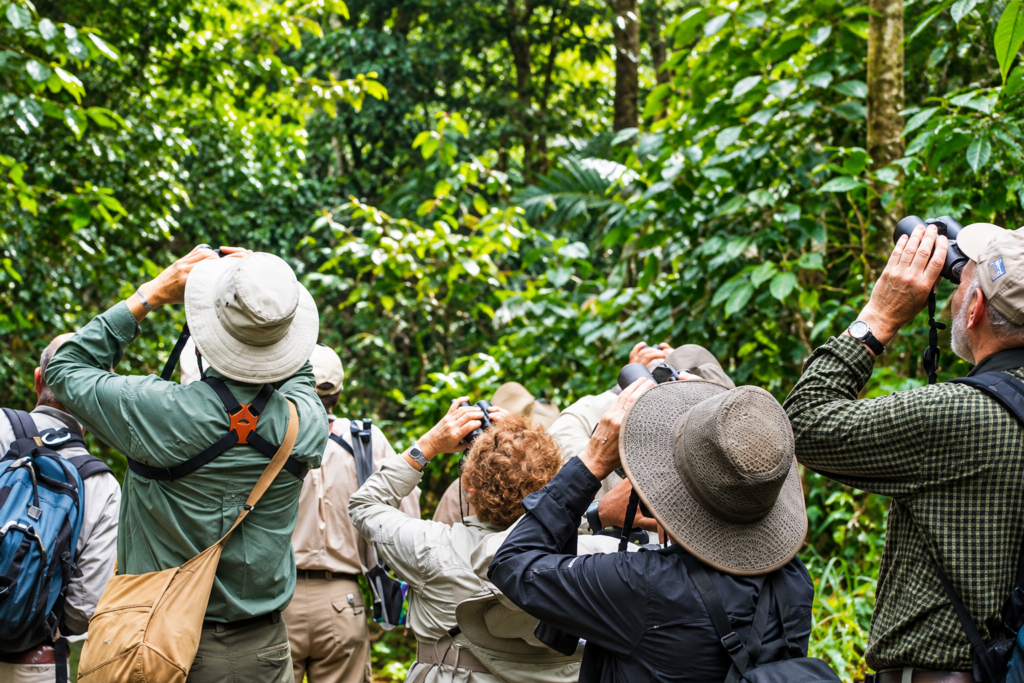
Kibale attracts birders because its forest supports a rich mix of species. Rather than rushing through a long checklist, serious birdwatchers often spend time searching different forest levels, edges and nearby wetland habitats.
Species associated with the wider Kibale birding area include the African pitta, great blue turaco, black bee-eater, African grey parrot, crowned eagle, yellow-spotted barbet, black-capped apalis, green-breasted pitta and several forest robins, hornbills, flycatchers and sunbirds.
Sightings always depend on season, habitat, weather and luck. Therefore, travellers targeting particular species should discuss their target list with a knowledgeable local birding guide before arrival.
Green-Breasted Pitta Birding in Kibale
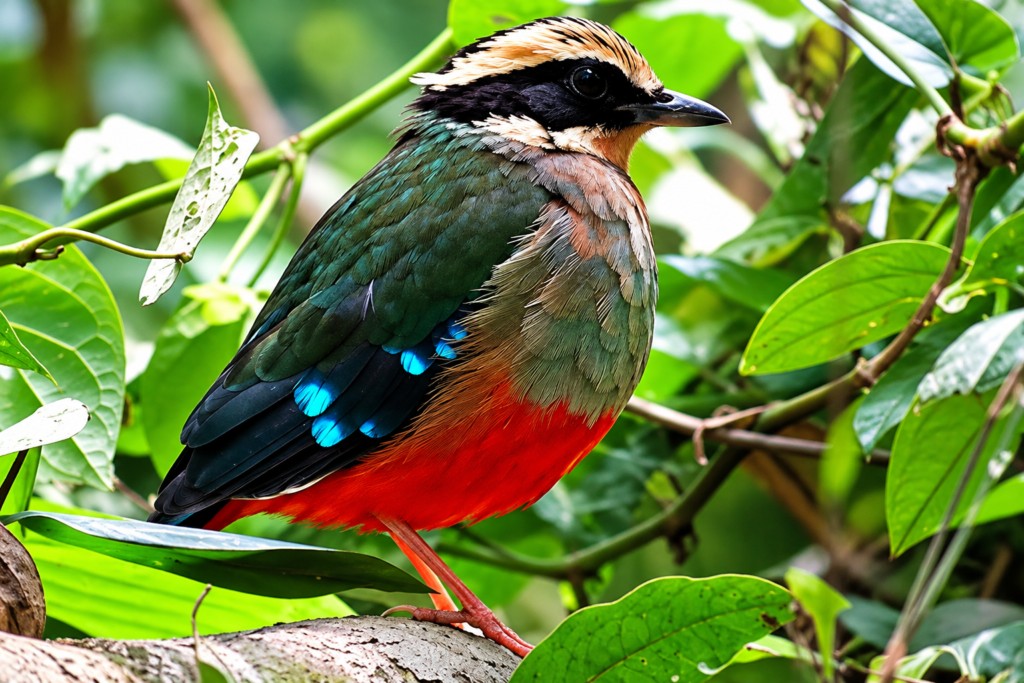
The green-breasted pitta is one of the birds that draws specialist birders to Kibale. Finding one requires patience, local knowledge and suitable conditions, so visitors should never treat a sighting as guaranteed.
Birders specifically targeting the pitta should allow enough time in their itinerary rather than relying on a short general nature walk. An experienced guide can concentrate the search around appropriate forest habitat and recent observations.
Staying near the park also makes an early start easier. Explore our Kibale Forest Accommodation guide when choosing a base close to the forest.
Best Birding Areas Around Kibale
Kibale birding extends beyond a single trail. Forest interiors, edges, community areas and nearby wetlands create opportunities to search for different groups of birds.
The Kanyanchu area provides convenient access to Kibale’s forest environment. Meanwhile, nearby community and wetland habitats can add species that visitors may not encounter inside dense forest.
Birders can also combine Kibale with Bigodi Wetland Sanctuary and other nearby habitats as part of a longer birdwatching itinerary. This approach increases habitat diversity and gives visitors more time in the field.
Guided Birding Walks in Kibale
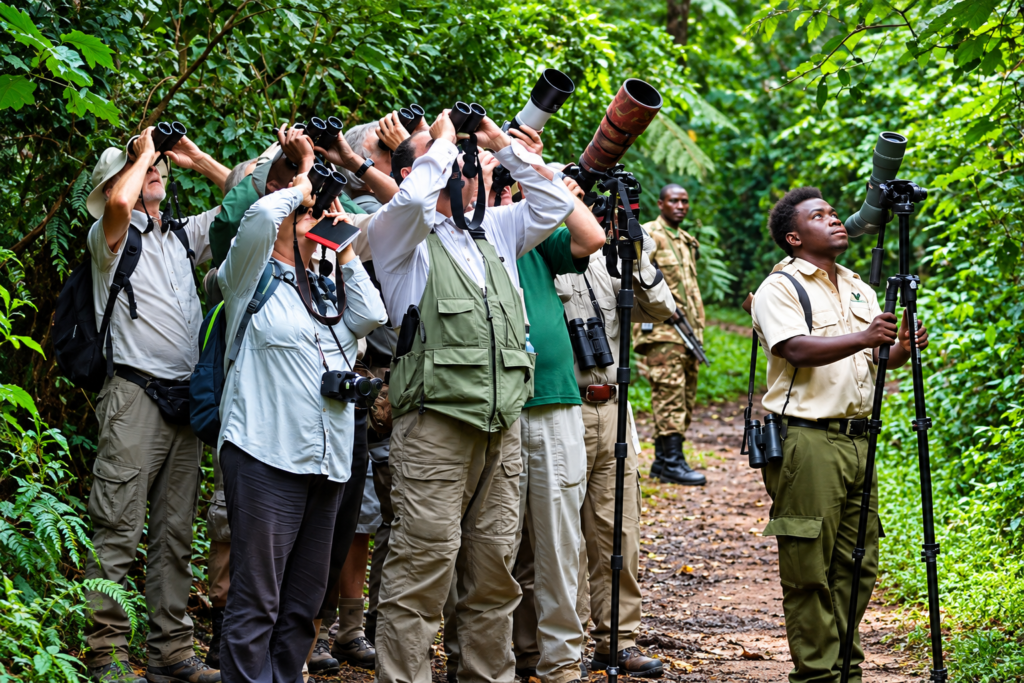
A knowledgeable guide can make a major difference during forest birding. Dense vegetation often makes birds difficult to see even when they call nearby.
Guides listen for calls, identify feeding areas and help birders search different levels of the forest. Furthermore, they can adjust the walk according to target species, weather and recent sightings.
Independent birders can still enjoy the area, but specialist guiding becomes particularly valuable when searching for difficult forest species.
Best Time for Birding in Kibale
Birdwatching takes place throughout the year in Kibale, although conditions change between wetter and relatively drier periods.
Drier periods can make forest trails easier to walk. However, wetter months can also produce rewarding bird activity and lush forest conditions. Migratory movements can further change the species encountered at different times of year.
For travellers combining birding with primates, our Best Time for Chimpanzee Tracking guide provides additional seasonal planning information.
Birding and Chimpanzee Tracking in One Trip
Kibale makes it possible to combine two major wildlife interests without constantly changing accommodation. Visitors can dedicate one morning to chimpanzee tracking and reserve additional mornings or afternoons for birding.
Serious birders should avoid squeezing both experiences into an overly tight schedule. Instead, allowing several nights near Kibale creates more opportunities for early birding sessions, forest walks and changing weather conditions.
If chimpanzees form part of your itinerary, read our Chimpanzee Permits in Uganda guide before confirming your travel dates.
Where to Stay for Birding in Kibale
Choosing accommodation close to the forest helps birders maximize their time outdoors. Early starts become easier, while the surrounding vegetation can provide additional birdwatching opportunities before and after formal excursions.
Little Monkey Camp provides accommodation and camping near Kibale National Park. Its forest-edge setting suits birders, self-drive travellers and guests combining birdwatching with chimpanzee experiences.
Explore Little Monkey Camp for accommodation information, camping options and guest facilities.
Camping for Birders Near Kibale
Self-drive birders and overland travellers can base themselves near Kibale without requiring conventional lodge accommodation. Rooftop tents and ground tents provide flexibility for travellers carrying their own camping equipment.
African River Camps offers camping options for travellers exploring several birding destinations in Uganda. See our [Camping in Uganda](/camping-in-uganda/) guide for campsite information and planning details.
What to Bring for Birding in Kibale
Bring good binoculars, comfortable walking shoes, lightweight long trousers and a rain jacket. A field guide or birding application can also help with identification and recording sightings.
Photographers should protect cameras and lenses from humidity and sudden rain. Meanwhile, carrying drinking water and a small daypack makes longer forest walks more comfortable.
Most importantly, bring your target bird list. Sharing it with your guide before the trip allows better planning around habitats and available birding time.
Bird Photography in Kibale
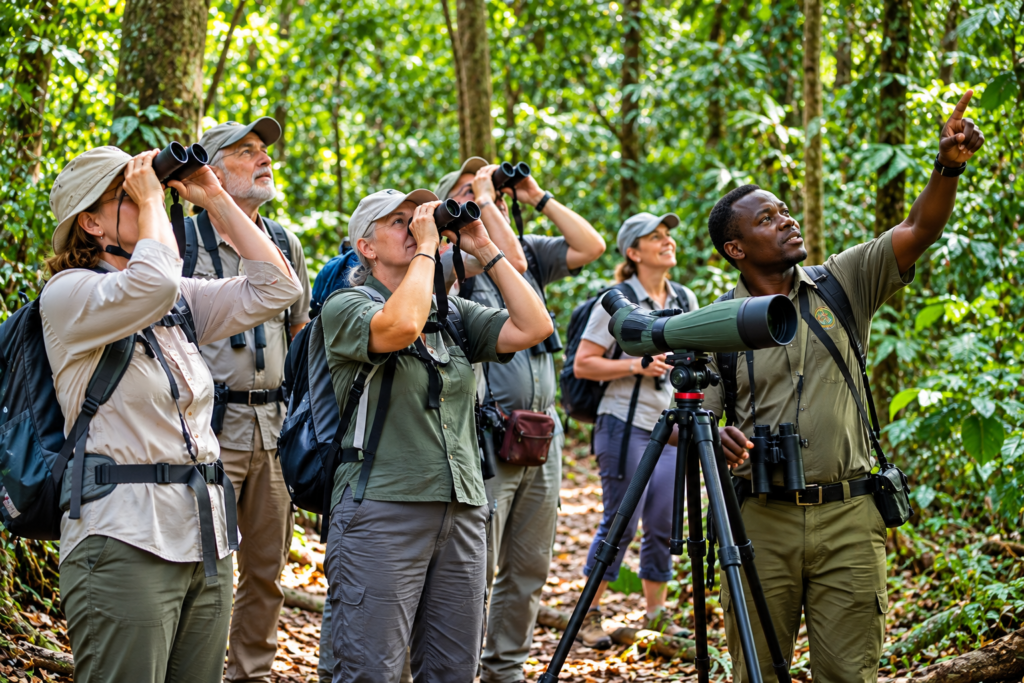
Kibale offers excellent photographic possibilities, although forest photography can challenge even experienced photographers. Dense vegetation, moving birds and changing light require patience.
A longer lens helps when photographing canopy species. Nevertheless, photographers should also prepare for closer forest encounters and darker conditions beneath the canopy.
Spending several days in the area provides more opportunities than relying on one short outing.
Combine Kibale, Bugoma and Semliki
International birders can turn a Kibale stay into a broader western Uganda birding route. After exploring Kibale, travellers can continue toward Bugoma Forest and then Semliki for very different habitats and bird communities.
Nguse River Camp provides a useful stop around the Bugoma corridor, while Semliki Fishing River Camp provides access to the Semliki area.
For the complete three-camp concept, use our Birding in Uganda guide to plan the wider route.
How Many Nights Should Birders Spend in Kibale?
A short stay can introduce visitors to Kibale’s birdlife, but dedicated birders benefit from additional time.
Consider two or three nights at minimum if you want to combine birding with chimpanzee tracking. Twitchers pursuing particular forest species may prefer a longer stay because wildlife sightings remain unpredictable.
Extra time also creates flexibility when rain or changing forest conditions affect a planned birding session.
Responsible Birding in Kibale
Keep noise low and follow instructions from guides while birdwatching. Avoid disturbing nests, feeding wildlife or pushing too close to birds simply for photographs.
Responsible birding protects the habitats that make Kibale valuable to both wildlife and visitors. Supporting local guides, accommodation and community experiences can also spread tourism benefits around the destination.
Frequently Asked Questions About Birding in Kibale
Is Kibale National Park good for birdwatching?
Yes. Kibale combines tropical forest with surrounding wetlands, woodland and community habitats, giving birders access to varied birdlife within one destination.
Which bird is Kibale particularly famous for?
The green-breasted pitta attracts considerable interest from specialist birders. However, sightings depend on conditions and should never be guaranteed.
Can I combine birding with chimpanzee tracking?
Yes. Many travellers combine the two experiences while staying near Kibale National Park.
How many days do I need for birding in Kibale?
A general visitor can enjoy birding during a short stay. Dedicated birders should consider several days, especially when searching for specific species.
Do I need a birding guide?
A specialist guide can significantly improve a forest birding experience because many species remain difficult to locate in dense vegetation.
What time of day is best for birding?
Early morning generally provides excellent opportunities as bird activity increases. Conditions and target species can influence the exact schedule.
Can photographers go birding in Kibale?
Yes. Kibale offers opportunities for bird photography, although forest light and vegetation can make photography challenging.
Is Kibale suitable for self-drive birders?
Yes. Self-drive travellers can stay near Kibale and arrange local activities according to their itinerary.
Can I camp near Kibale National Park?
Yes. Little Monkey Camp provides a base for travellers interested in camping near Kibale. Check current availability before arrival.
Can I include Kibale in a longer Uganda birding itinerary?
Yes. Kibale combines naturally with Bugoma and Semliki, while longer Uganda itineraries can include additional wetland, savannah and forest birding destinations.
Book Your Kibale Birding Stay
Plan your birding in Kibale around the species you want to find, the number of days available and any additional primate activities. African River Camps can help with accommodation at Little Monkey Camp and local trip planning around the Kibale area.
For a broader route covering our three birding bases, explore the Birding in Uganda itinerary before finalizing your journey.
For direct availability, use the WhatsApp button below.