Chimpanzee Tracking in Kibale National Park
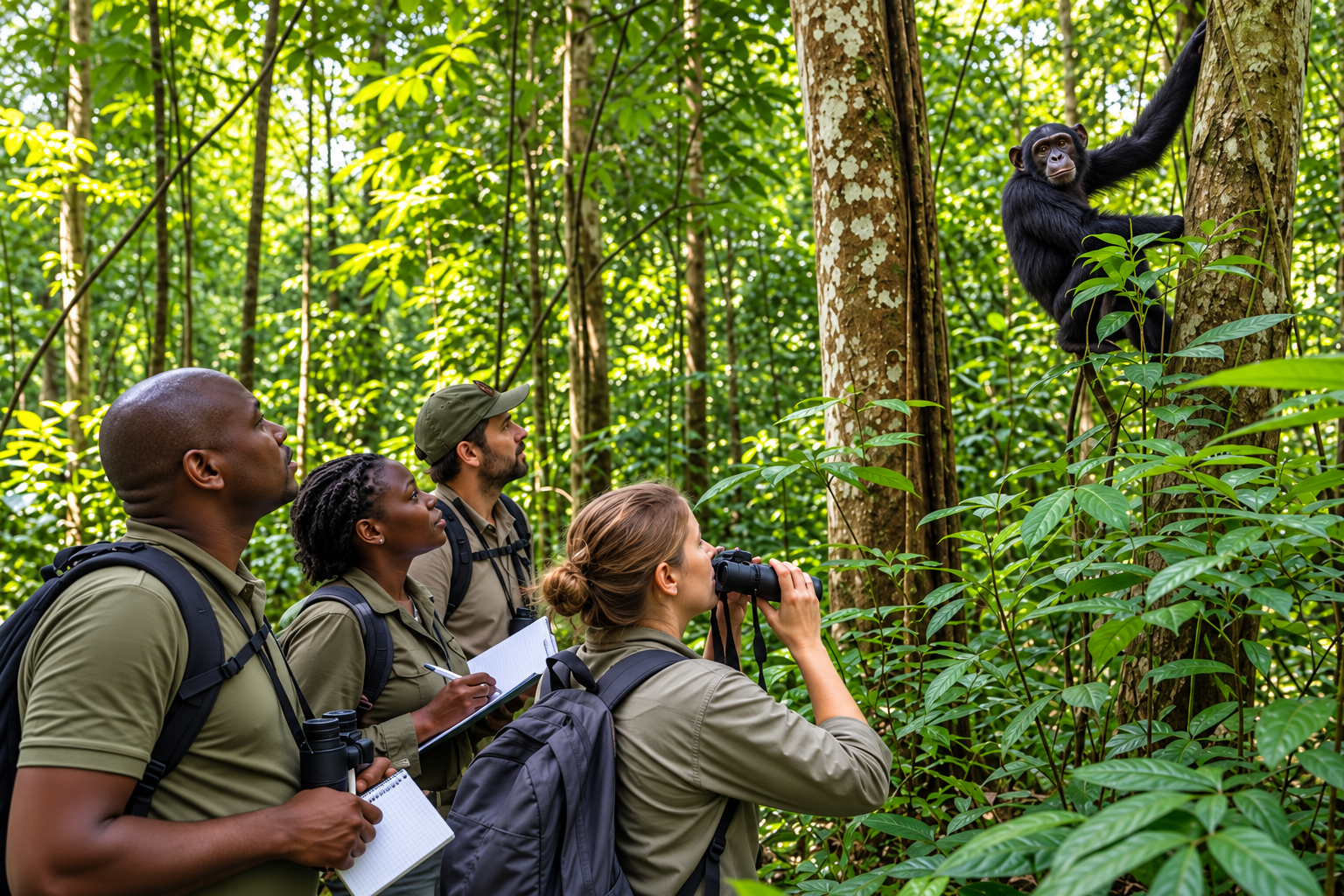
Chimpanzee tracking in Kibale gives visitors the chance to explore one of Uganda’s most important primate destinations. Kibale National Park supports a remarkable diversity of primates, while experienced guides lead visitors through the tropical forest in search of habituated chimpanzee communities.
Most travellers visit Kibale specifically for chimpanzees, but the destination also works well for birding, nature walks and longer Uganda safari itineraries. Staying close to the forest makes early tracking starts easier and gives you more time to enjoy the surrounding area.
Before confirming accommodation, check your preferred tracking date and arrange the required permit. Our guide to chimpanzee permits in Uganda explains permit planning, standard tracking and the longer habituation experience.
Seasonal conditions can also influence trail conditions and what you should pack. Read our best time for chimpanzee tracking guide when choosing your travel dates.
Visitors who want to stay close to Kibale can explore our Kibale Forest accommodation options and use Little Monkey Camp as a convenient base for their forest activities.
What Is Chimpanzee Tracking in Kibale National Park?
Chimpanzee tracking in Kibale National Park takes visitors into the tropical forest with trained guides to search for habituated chimpanzee communities. Once the group finds the chimpanzees, visitors can observe their behaviour, movements, feeding habits and social interactions while following the guide’s instructions.
Kibale offers one of Uganda’s best-known primate experiences and attracts travellers who want to see chimpanzees in their natural forest habitat. The activity involves walking along forest trails, so comfortable hiking shoes, drinking water and light rain protection can make the experience easier.
Standard chimpanzee tracking differs from the longer habituation experience. Travellers who want more time around the chimpanzees can learn about that option in our chimpanzee permits in Uganda guide.
Guests can also stay close to the park and reduce travel time before their tracking session. See our Kibale Forest accommodation guide when planning where to stay.
Why Choose Kibale for Chimpanzee Tracking?
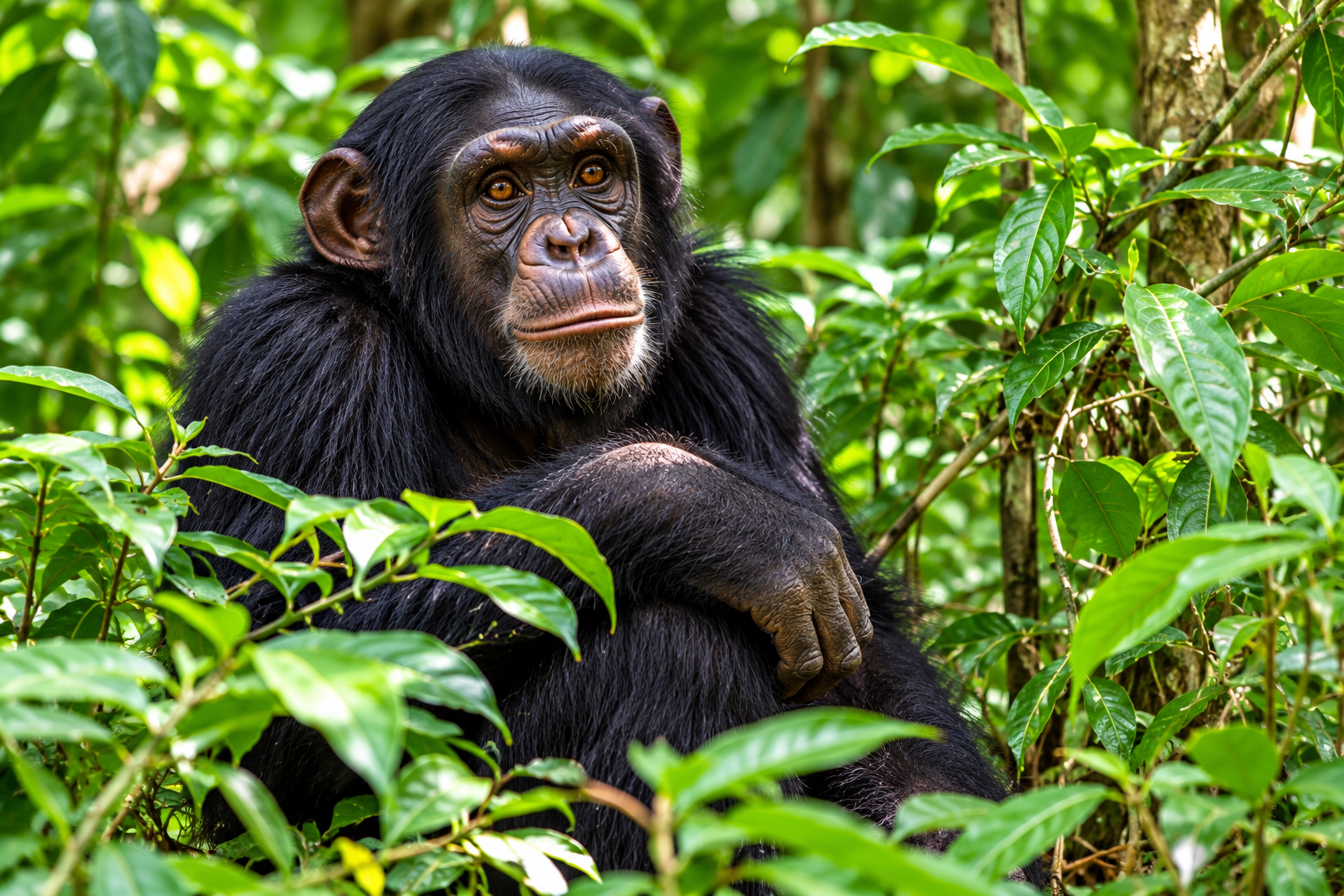
Kibale National Park stands out as one of Uganda’s leading destinations for travellers who want to experience chimpanzees in a natural rainforest environment. Guided forest walks create opportunities to observe chimpanzees while also discovering the park’s rich primate and birdlife.
Visitors can choose between standard chimpanzee tracking and the longer chimpanzee habituation experience. These options make Kibale suitable for both first-time visitors and travellers who want to spend more time learning about chimpanzee behaviour.
The park also combines easily with other Uganda safari destinations, including Queen Elizabeth National Park. Travellers can therefore include chimpanzee tracking alongside wildlife viewing, birding and other nature experiences.
Choosing accommodation near the forest can make an early tracking day more convenient. Little Monkey Camp provides a practical base near Kibale, with accommodation, camping and access to additional forest activities.
Travel dates also matter when planning your visit. Check our best time for chimpanzee tracking guide for information about rainfall, seasons and trail conditions.
How Does Chimpanzee Tracking in Kibale Work?
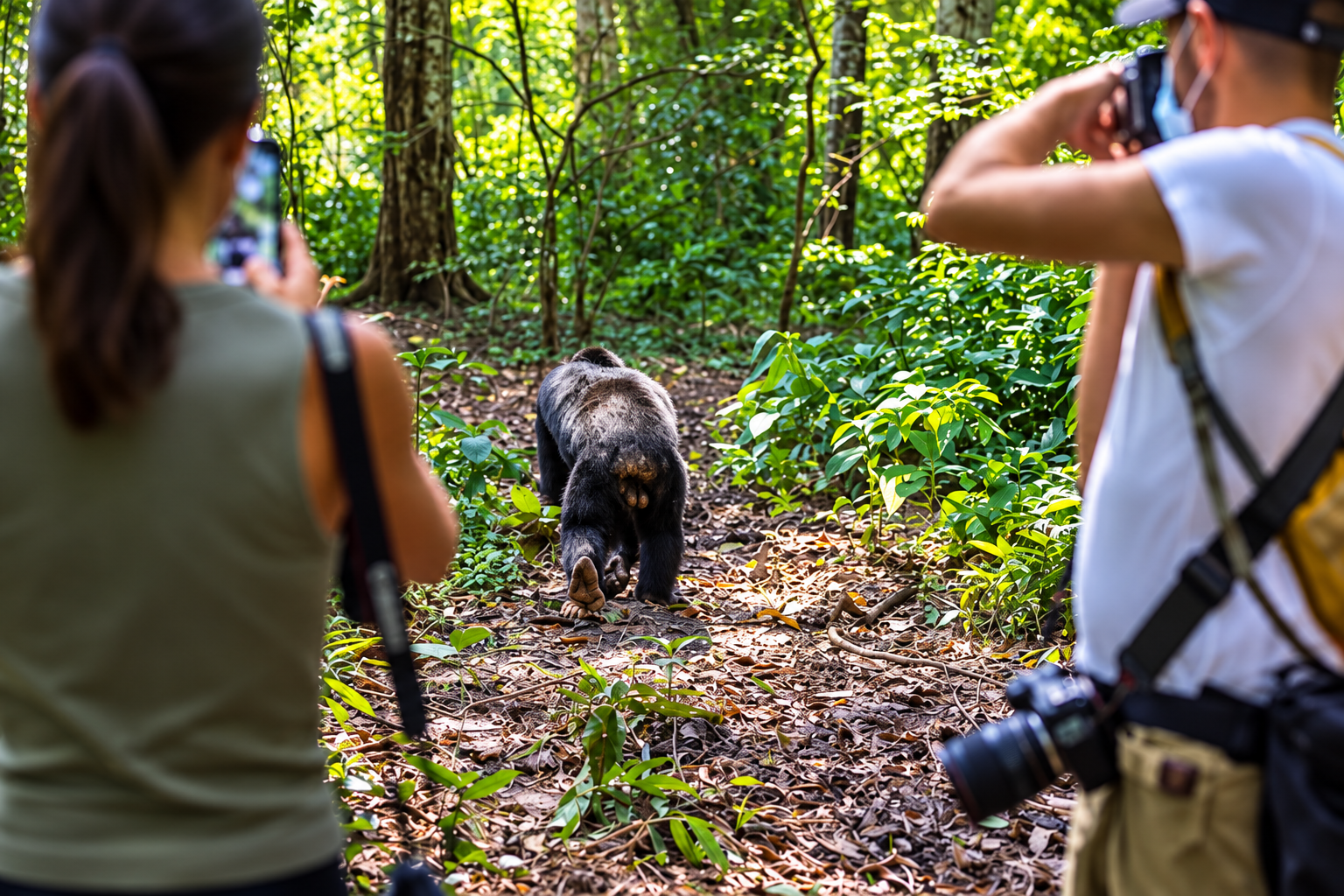
Your chimpanzee tracking experience normally starts with a briefing from the park guides. The briefing explains forest rules, safety guidelines and how visitors should behave when they encounter chimpanzees.
After the briefing, a trained guide leads your group into Kibale Forest. Trackers use signs such as calls, movement, feeding areas and recent chimpanzee activity to help locate the habituated community.
Walking time varies because chimpanzees move freely through the forest. Some groups may locate them relatively quickly, while others need to walk farther before making an encounter.
Once you reach the chimpanzees, follow your guide’s instructions and enjoy the opportunity to watch their natural behaviour. You may see them feeding, climbing trees, resting, calling or interacting with other members of the community.
A valid permit remains essential for the activity. Check our chimpanzee permits in Uganda guide before confirming your travel arrangements.
How Long Does the Experience Take?
Chimpanzee tracking in Kibale usually takes several hours, but the exact duration depends on where the chimpanzees move that day. Your group may find them quickly or spend more time walking through the forest before reaching them.
Standard tracking allows visitors to spend up to one hour with the chimpanzees after locating them. During that time, you can observe their behaviour, take photographs and listen as your guide explains how the community lives and communicates.
Travellers who want a longer experience can consider chimpanzee habituation. This activity provides more time with the chimpanzees and offers a deeper look at their daily behaviour.
Fitness level, trail conditions and rainfall can also affect the length and difficulty of your forest walk. Check our best time for chimpanzee tracking guide before selecting your dates.
Chimpanzee Tracking vs Chimpanzee Habituation in Kibale
Kibale National Park offers two different ways to spend time with chimpanzees: standard chimpanzee tracking and the chimpanzee habituation experience. Your choice depends mainly on how much time you want to spend in the forest and the type of primate experience you prefer.
Standard tracking suits travellers who want to include chimpanzees within a broader Uganda safari. After your group locates the chimpanzees, you can spend up to one hour observing them while your guide explains their behaviour and social interactions.
Chimpanzee habituation provides a longer forest experience. Participants can spend up to four hours with the chimpanzees after locating them, which creates more opportunities to observe feeding, movement, communication and interactions within the community.
Both activities require permits, and availability can become limited during popular travel periods. Read our chimpanzee permits in Uganda guide before choosing your experience.
Travellers planning the longer habituation experience may also benefit from staying close to the park. Explore our Kibale Forest accommodation options when organizing your visit.
Travellers interested in spending longer with chimpanzees can read our Kibale Chimpanzee Habituation guide for details about the experience, planning your visit and where to stay.
How Much Does Chimpanzee Tracking in Kibale Cost?
The total cost of tracking in Kibale depends on your permit, accommodation, transport and additional activities. Your choice between standard tracking and chimpanzee habituation will also affect the overall safari price.
Uganda Wildlife Authority manages chimpanzee permits for Kibale National Park and sets the official permit fees. Rates can change, so travellers should confirm the current price before making final travel arrangements rather than relying on outdated online prices.
Accommodation can range from camping and budget stays to more comfortable lodge options. Staying near the park can also reduce transfer time on the morning of your chimpanzee experience.
For permit planning and current booking information, see our chimpanzee permits in Uganda guide.
Travellers looking for a convenient base can also explore our Kibale Forest accommodation options.
Kibale offers much more than primates. Travellers can also enjoy Birding in Kibale, exploring forest trails with local guides while searching for colourful and distinctive bird species.
Best Time for Tracking in Kibale
Visitors can enjoy tracking in Kibale throughout the year. However, seasonal rainfall changes trail conditions and can influence how comfortable your forest walk feels.
The relatively drier periods from June to September and December to February often provide easier walking conditions. Trails may have less mud during these months, although rain can still fall at any time in Kibale’s tropical forest.
Wetter periods bring greener vegetation and a rich rainforest atmosphere. Travellers who visit during these months should prepare for muddy trails and carry suitable rain protection.
Permit availability can matter just as much as the weather, especially when demand increases during popular travel periods. Our complete best time for chimpanzee tracking guide explains seasonal conditions and month-by-month planning in more detail.
After choosing your dates, arrange your permit and accommodation early. Staying near Kibale can make the morning of your tracking experience much easier.
Where to Stay for Tracking in Kibale
Choosing accommodation close to Kibale National Park can make your chimpanzee tracking experience more convenient. A nearby stay reduces morning travel time and gives you easier access to other forest activities.
Little Monkey Camp provides accommodation near Kibale for travellers visiting the area for chimpanzee tracking. Guests can choose comfortable accommodation or camping while using the camp as a base for exploring the forest and surrounding attractions.
The camp also suits travellers interested in birding, nature walks, coffee experiences and other activities around Kibale. Its location makes it practical for visitors who want to spend more than one night in the area.
Explore our Kibale Forest accommodation guide for more information about planning your stay.
Self-drive and overland travellers can also explore our camping in Uganda options.
For the smoothest trip, confirm your chimpanzee permit before finalising your accommodation dates.
Travellers planning an overnight stay can explore our Kibale Chimpanzee Accommodation guide for rooms, camping, vegetarian meals and accommodation at Little Monkey Camp.
What to Wear for Tracking in Kibale
Wear comfortable clothing that protects you while walking through Kibale’s tropical forest. Lightweight long trousers and a long-sleeved shirt can help protect your skin from vegetation, insects and scratches along the trails.
Choose sturdy walking shoes or hiking boots with good grip. Rain can make forest paths muddy and slippery, so suitable footwear makes a noticeable difference.
Carry a lightweight waterproof jacket because Kibale can receive rain throughout the year. A small backpack works well for drinking water, insect repellent, sunscreen and camera equipment.
Neutral-coloured clothing works well for forest activities. Avoid carrying unnecessary heavy equipment because tracking may involve several hours of walking.
Weather conditions change between seasons, so check our best time for chimpanzee tracking guide when preparing for your trip.
What Should You Bring for Tracking?
Packing the right items can make your chimpanzee tracking experience in Kibale more comfortable. Keep your daypack light, but prepare for changing forest conditions.
Bring drinking water, insect repellent and a lightweight waterproof jacket. A small backpack will keep these essentials together while leaving your hands free during the forest walk.
Carry a camera or smartphone if you want to photograph the chimpanzees. Protect your equipment from rain and moisture, and always follow your guide’s instructions when taking photographs.
Gardening gloves can help protect your hands when you need support from vegetation along slippery sections of the trail. Travellers may also carry a few snacks where park rules allow them, but guides will explain when and where you can eat.
Your permit and identification documents should remain easily accessible on the tracking day. For permit requirements and planning, read our chimpanzee permits in Uganda guide.
Tracking Rules in Kibale National Park
Following the chimpanzee tracking rules helps protect both visitors and chimpanzees. Your guide will explain the current park regulations during the briefing before you enter the forest.
Keep the required distance from the chimpanzees and avoid approaching them on your own. Always follow your guide when the animals move through the forest.
Avoid eating near chimpanzees, making unnecessary noise or using flash photography. Sudden movements can disturb the animals and reduce the quality of the experience for everyone.
Visitors should also avoid tracking when they have an infectious illness because chimpanzees share biological similarities with humans and can contract some human diseases. Tell your guide or tour operator if you feel unwell before the activity.
Respect the forest by keeping all rubbish with you and avoiding unnecessary damage to vegetation. These simple practices support responsible chimpanzee tourism and help protect Kibale’s ecosystem.
For permit planning before your visit, read our chimpanzee permits in Uganda guide.
Can Children Go Tracking in Kibale?
Chimpanzee tracking in Kibale National Park has a minimum age requirement of 12 years. Uganda Wildlife Authority sets this requirement for visitors taking part in the standard chimpanzee tracking experience.
Families travelling with younger children should plan alternative activities for them while older family members enter the forest. Depending on your itinerary, children can enjoy suitable nature, community or camp-based experiences around the Kibale area.
Parents should also consider a child’s fitness and comfort with forest walking, even when the child meets the minimum age requirement. Trails can become muddy, uneven or challenging after rainfall.
Always confirm the latest age requirements when arranging your permit because park regulations can change. Our chimpanzee permits in Uganda guide provides additional information for planning your Kibale experience.
How to Book Chimpanzee Tracking in Kibale
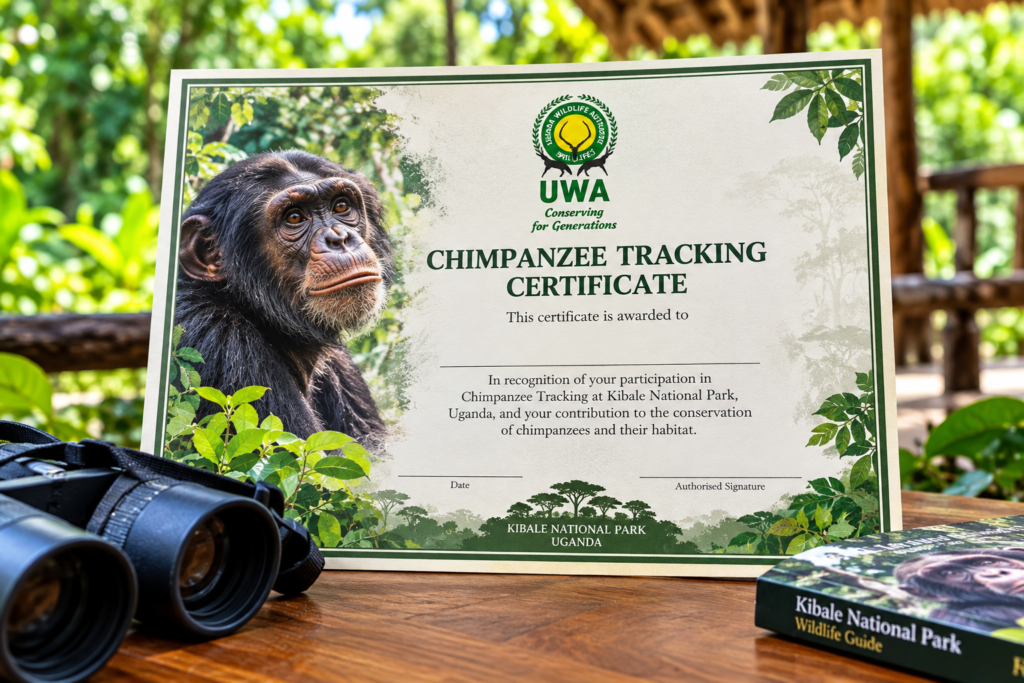
Start by choosing your preferred travel dates and deciding whether you want standard chimpanzee tracking or the longer chimpanzee habituation experience. Permit availability should guide your accommodation and wider safari plans.
Uganda Wildlife Authority manages chimpanzee permits for Kibale National Park. Travellers can arrange permits through authorized tour operators or follow the current booking procedures provided by UWA.
Book early when travelling during popular safari periods. Limited permit availability can make last-minute planning difficult, especially when you need specific dates.
After confirming your permit, arrange accommodation close to Kibale National Park. Our Kibale Forest accommodation guide can help you choose a convenient base for your tracking day.
You can also read our chimpanzee permits in Uganda guide for more information about permits, tracking and habituation.
Planning a Chimpanzee Habituation Experience in Kibale
Visitors looking for a longer primate experience can explore our detailed guide to chimpanzee habituation in Kibale Forest. Unlike standard chimpanzee trekking, habituation offers an extended opportunity to observe chimpanzees in their natural habitat, subject to Uganda Wildlife Authority regulations. The experiences require different permits, so travellers should confirm availability before planning their visit. Little Monkey Camp provides convenient accommodation near Kanyanchu Visitor Centre for guests participating in either activity.
Chimpanzee Tracking in Kibale FAQs
Is chimpanzee tracking in Kibale worth it?
Kibale offers visitors the opportunity to observe habituated chimpanzees in their natural rainforest habitat. The experience also introduces travellers to the forest’s wider primate, bird and plant life.
How long does tracking in Kibale take?
The complete activity can take several hours because guides first need to locate the chimpanzees. Standard tracking allows visitors to spend up to one hour with the chimpanzees after finding them.
What is the minimum age for tracking in Kibale?
The minimum age for standard chimpanzee tracking is 12 years. Confirm the latest requirements when booking because regulations can change.
Can I see chimpanzees in Kibale throughout the year?
Yes. Visitors can track chimpanzees throughout the year, although rainfall changes trail conditions. Our best time for chimpanzee tracking guide explains the seasons in more detail.
Do I need a permit for tracking in Kibale?
Yes. You need a valid chimpanzee tracking permit for the activity. Read our chimpanzee permits in Uganda guide before arranging your trip.
Should I book my chimpanzee permit in advance?
Yes, especially when you have fixed travel dates. Booking early gives you a better chance of securing your preferred tracking date before arranging the rest of your Kibale stay.
Where should I stay for tracking in Kibale?
Choose accommodation close to Kibale National Park to reduce morning transfer time. See our Kibale Forest accommodation guide for planning your stay.
Can I camp near Kibale National Park?
Yes. Camping can suit self-drive, rooftop-tent and overland travellers visiting the Kibale area. See our camping in Uganda page for options and rates.
What happens if it rains during tracking?
Rain forms part of the Kibale rainforest experience and can occur throughout the year. Bring a waterproof jacket, suitable footwear and protection for your camera or phone.
Can I combine Kibale tracking with other safari activities?
Yes. Travellers often combine Kibale with other Uganda wildlife and nature experiences. Staying for additional nights also gives you time for birding, community experiences and other activities around the forest. After a daytime chimpanzee experience, travellers can also join Night Walks in Kibale to explore the forest environment after dark and search for nocturnal wildlife.
After chimpanzee tracking, guests can slow down with our Coffee Experience in Kibale, exploring the coffee garden and discovering local coffee culture at Little Monkey Camp.
Visitors staying for several nights can explore our Things to Do in Kibale guide for birding, night walks, coffee experiences and other activities around the forest.
Plan Your Kibale Chimpanzee Experience
Ready to experience chimpanzee tracking in Kibale? Start by choosing your travel dates, checking permit availability and deciding whether you prefer standard tracking or the longer habituation experience.
Secure your chimpanzee permit before finalising the rest of your itinerary. Our chimpanzee permits in Uganda guide explains the main options and helps you prepare for the booking process.
Stay close to the forest to make your tracking morning easier. Little Monkey Camp provides a convenient base near Kibale National Park for accommodation, camping and additional forest experiences.
Travellers still choosing their dates can read our best time for chimpanzee tracking guide. You can also explore our Kibale Forest accommodation page when planning your stay.
Send African River Camps your travel dates, number of guests and preferred chimpanzee experience so we can help coordinate your Kibale stay.