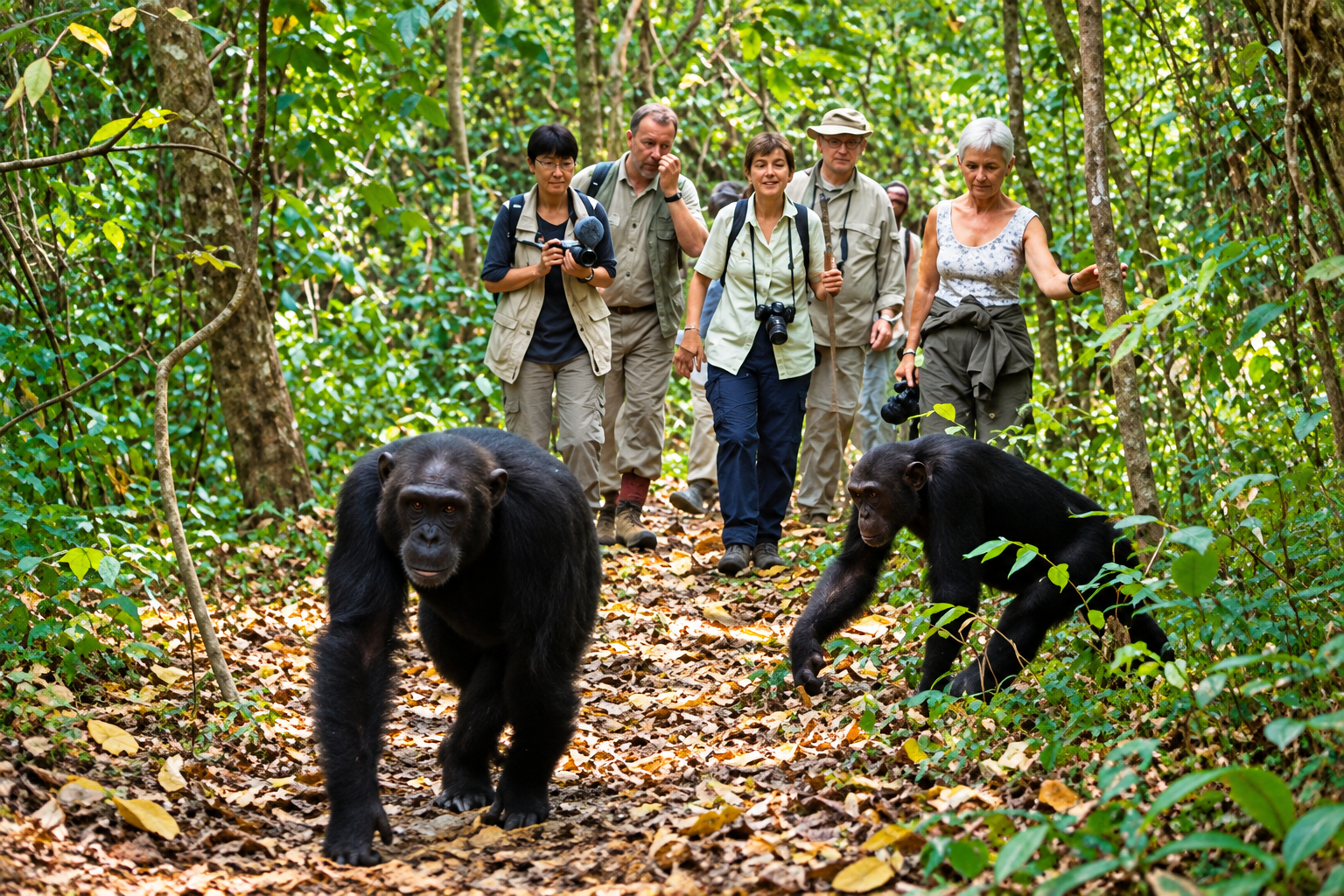
Best time for chimpanzee tracking in Uganda depends on rainfall, forest conditions and the type of experience you want. Visitors can track chimpanzees throughout the year, but seasonal changes can affect walking conditions, photography and the overall forest experience.
Kibale National Park remains one of Uganda’s leading chimpanzee destinations, while Bugoma Forest offers another option for travellers seeking primate and forest experiences. Choosing the right travel period can help you plan comfortable forest walks and combine chimpanzee tracking with other Uganda safari activities.
Before choosing your dates, read our guide to chimpanzee permits in Uganda. It covers permit planning, tracking, habituation and accommodation for Kibale and Bugoma Forest.
African River Camps also provides convenient accommodation for both destinations. Visitors to Kibale can stay at Little Monkey Camp, while travellers exploring Bugoma Forest can use Nguse River Camp as their accommodation or camping base.
What Is the Best Time for Chimpanzee Tracking in Uganda?
Uganda offers chimpanzee tracking throughout the year, so there is no single month that suits every traveller. However, the drier periods generally provide easier forest walking conditions, while wetter months bring greener vegetation and a different rainforest atmosphere.
The June to September and December to February periods usually bring relatively drier conditions in much of Uganda. Forest trails can become easier to navigate during these months, which appeals to travellers who want to combine chimpanzee tracking with other safari activities.
Rain can still fall at any time in tropical forests such as Kibale and Bugoma Forest. Visitors should therefore carry suitable walking shoes, rain protection and a small daypack regardless of the month they travel.
Your preferred dates should also depend on chimpanzee permit availability and accommodation. Check our chimpanzee permits in Uganda guide before confirming your safari dates.
Best Time for Chimpanzee Tracking in Kibale
Kibale National Park offers chimpanzee tracking throughout the year. Many travellers choose the relatively drier months because forest trails can feel easier to walk, especially when combining chimpanzee tracking with other activities around Kibale.
June to September and December to February generally provide relatively drier conditions. These periods work well for travellers who want to combine chimpanzee tracking with birding, crater lakes, community experiences and a wider Uganda safari.
The wetter months can still provide rewarding chimpanzee experiences. Rain keeps Kibale’s vegetation lush, while fewer visitors during some periods may appeal to travellers who prefer a quieter forest experience. Because Kibale remains a tropical rainforest, visitors should prepare for rain during any month.
Staying close to the tracking area also makes early departures easier. Little Monkey Camp provides accommodation and camping near Kibale National Park, together with meals and access to other forest experiences.
Travellers should secure their chimpanzee permits in Uganda before finalizing accommodation during popular travel periods.
Best Time for Chimpanzee Tracking in Bugoma Forest
Bugoma Forest offers chimpanzee tracking within one of Uganda’s important tropical forest habitats. Visitors can plan the experience throughout the year, although rainfall influences trail conditions and the type of forest experience they encounter.
The relatively drier periods from December to February and June to September can provide more comfortable walking conditions. Travellers should still prepare for rain because tropical forest weather can change quickly.
Wetter periods transform Bugoma Forest into a particularly lush environment. Visitors interested in chimpanzees, birds, forest scenery and photography can still enjoy rewarding experiences during these months when they carry suitable footwear and rain protection.
Nguse River Camp provides a convenient accommodation and camping base for travellers visiting Bugoma Forest. Guests can combine chimpanzee tracking with birdwatching, nature walks and other forest experiences.
Before confirming your dates, check our chimpanzee permits in Uganda guide for current planning information about Bugoma Forest and Kibale.
Chimpanzee Tracking by Month in Uganda
Seasonal conditions can help travellers decide the best time for chimpanzee tracking, although Kibale and Bugoma Forest remain year-round destinations. Rainfall patterns vary from year to year, so treat monthly conditions as a planning guide rather than a guarantee.
January and February often bring relatively drier conditions. Forest trails may feel easier to walk, making these months attractive for visitors combining chimpanzee tracking with a longer Uganda safari.
March, April and May generally bring more rainfall. Expect greener forests, wetter trails and occasional heavy showers. Good waterproof clothing and sturdy footwear become particularly useful during this period.
June, July, August and September generally fall within another relatively drier period. These months attract many safari travellers, so securing chimpanzee permits and accommodation early becomes more important.
October and November often bring increased rainfall again. The forests remain lush, while visitors should prepare for muddy sections and changing weather during their trek.
December often marks a transition toward relatively drier conditions. It can also become a popular travel period, particularly around Christmas and New Year, so early planning helps when permits and accommodation matter to your itinerary.
Dry Season vs Wet Season Chimpanzee Tracking
Both dry and wet seasons can provide rewarding chimpanzee tracking in Uganda, but each period offers a different forest experience. Your choice should depend on your preferred walking conditions, photography interests and wider safari plans.
During the drier seasons, trails in Kibale National Park and Bugoma Forest can become easier to walk. Travellers who plan several safari activities often prefer these months because road and forest conditions may also prove more convenient.
The wetter seasons bring greener vegetation, dramatic forest scenery and excellent conditions for travellers interested in the rainforest environment. Trails can become muddy and slippery, so sturdy footwear and waterproof clothing become more important.
Rainfall should not determine your dates on its own. Chimpanzee permit availability, accommodation and your wider Uganda itinerary also matter when choosing when to travel.
If Kibale forms part of your safari, explore our Kibale Forest accommodation guide when planning where to stay.
Does Rain Affect Chimpanzee Tracking?
Rain can affect chimpanzee tracking in Uganda, mainly by changing forest trail conditions. Heavy rainfall can make some paths muddy and slippery, but rain does not automatically mean travellers cannot enjoy their chimpanzee experience.
Kibale National Park and Bugoma Forest are tropical forest environments, so visitors should prepare for changing weather throughout the year. A waterproof jacket, sturdy walking shoes and protection for cameras or phones can make wet conditions much easier to manage.
Rain also creates a different atmosphere inside the forest. Vegetation becomes lush, temperatures may feel cooler, and photographers can capture rich green landscapes alongside the primate experience.
Avoid choosing dates based only on a weather forecast. Instead, consider your permit availability, accommodation and complete safari itinerary when deciding the best time for chimpanzee tracking.
Best Time for Chimpanzee Habituation in Uganda
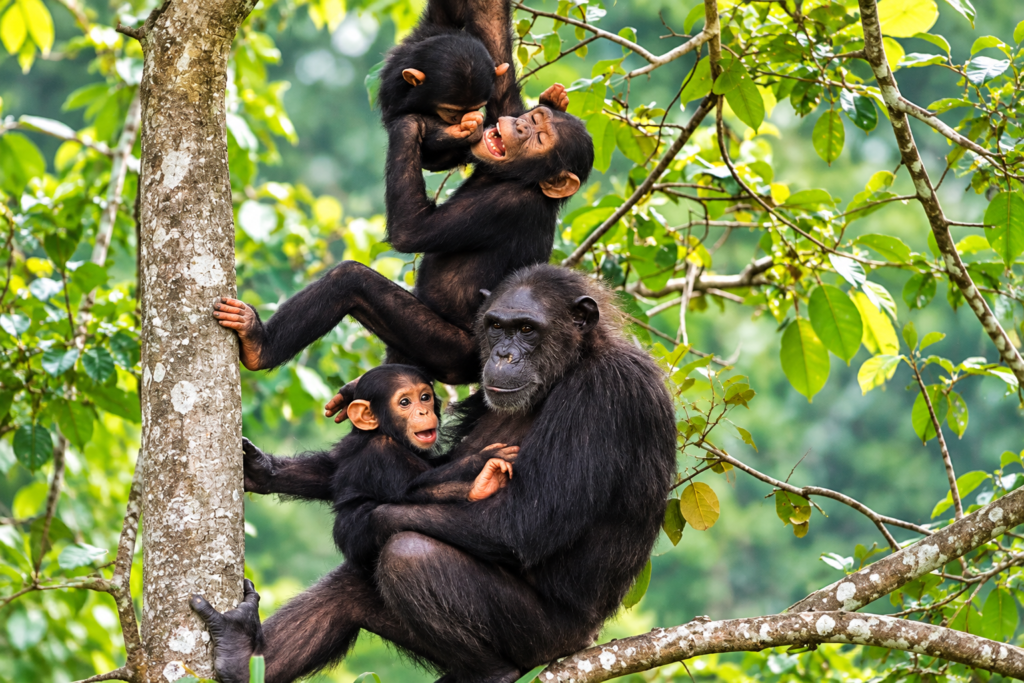
The chimpanzee habituation experience suits travellers who want to spend more time observing chimpanzees and learning about their behaviour. Kibale National Park offers this longer forest experience throughout the year, so visitors can choose dates that fit their wider Uganda safari.
Drier periods can make the longer forest walk more comfortable because trails often become easier to navigate. Wetter months remain possible, but visitors should prepare for mud, rainfall and changing conditions during several hours in the forest.
UWA guidelines allow visitors on the habituation experience to spend up to four hours with the chimpanzees, compared with up to one hour during standard tracking after locating them. Uganda Wildlife Authority chimpanzee guidelines
Permit availability can matter more than choosing a supposedly perfect month. Read our chimpanzee permits in Uganda guide before confirming your accommodation and travel dates.
Best Time for Chimpanzee Photography
The best time for chimpanzee photography depends on the type of images you want to capture. Kibale National Park and Bugoma Forest offer year-round opportunities, but changing rainfall and forest light can influence photography conditions.
Drier periods may provide easier walking conditions and make carrying camera equipment through the forest more comfortable. However, the forest canopy can create strong contrasts between bright openings and shaded areas, so photographers should prepare for changing light.
Wetter months create lush green backgrounds and rich forest scenery. Cloud cover can sometimes produce softer light, although rain means photographers need suitable protection for cameras, lenses and other equipment.
Chimpanzees move freely through the forest, so no month guarantees a particular photographic encounter. Follow your guide’s instructions, avoid flash photography and prioritize responsible wildlife viewing over getting a particular shot.
Photographers visiting Kibale can stay at Little Monkey Camp, while travellers photographing wildlife in Bugoma Forest can use Nguse River Camp as their accommodation base.
What to Wear for Chimpanzee Tracking
Wear comfortable clothing that protects you while walking through tropical forest. Long trousers and a lightweight long-sleeved shirt help protect your arms and legs from vegetation, insects and scratches along the trail.
Choose sturdy hiking or walking shoes with good grip. Forest paths in Kibale National Park and Bugoma Forest can become muddy or slippery after rain, so suitable footwear makes a noticeable difference during the trek.
Carry a lightweight waterproof jacket because rain can occur even during relatively dry months. A small backpack works well for drinking water, insect repellent, camera equipment and other personal essentials.
Neutral, comfortable outdoor clothing works well for forest activities. Avoid carrying unnecessary heavy equipment because chimpanzee tracking may involve walking for different distances before locating the chimpanzees.
Where to Stay for Chimpanzee Tracking
Choosing accommodation close to the forest makes chimpanzee tracking easier, particularly when your activity requires an early start. African River Camps provides accommodation and camping options for travellers visiting Kibale National Park and Bugoma Forest.
For Kibale, Little Monkey Camp provides a convenient base near the national park. Guests can combine chimpanzee tracking with birdwatching, night walks, coffee experiences and other forest activities. Explore our Kibale Forest accommodation guide when planning your stay.
Travellers visiting Bugoma Forest can stay at Nguse River Camp. The camp provides accommodation, camping, meals and Wi-Fi for visitors combining chimpanzee tracking with birdwatching and other Bugoma Forest experiences.
If you travel with a rooftop tent or your own camping equipment, explore our camping in Uganda guide for campsite and self-drive information.
Book your accommodation after checking chimpanzee permit availability so your stay matches your confirmed tracking date.
Best Time for Chimpanzee Tracking FAQs
What is the best month for chimpanzee tracking in Uganda?
There is no single best month for every traveller. Uganda offers chimpanzee tracking throughout the year, while relatively drier periods often provide easier forest walking conditions.
Can I track chimpanzees during the rainy season?
Yes. Chimpanzee tracking continues during wetter periods, although rain can make forest trails muddy and slippery. Bring suitable footwear and waterproof clothing.
Is January a good time for chimpanzee tracking?
January often falls within a relatively drier period and can offer comfortable forest walking conditions. Always check permit availability before confirming your travel dates.
Is July a good time for chimpanzee tracking in Uganda?
July generally falls within a relatively drier period and works well for travellers combining chimpanzee tracking with a wider Uganda safari. Demand can also increase during popular travel periods, so early booking helps.
Can I track chimpanzees in Kibale throughout the year?
Yes. Kibale National Park offers chimpanzee experiences throughout the year. Weather conditions vary, but visitors can plan tracking during both drier and wetter months.
What is the best time for chimpanzee tracking in Bugoma Forest?
Travellers can visit Bugoma Forest throughout the year. Relatively drier periods can provide easier walking conditions, while wetter months bring lush vegetation and a different forest atmosphere.
Is the dry season better for chimpanzee tracking?
The dry season often provides easier trail conditions, but it does not guarantee a better chimpanzee encounter. Chimpanzees live in the forest year-round, and every season offers a different experience.
Should I book chimpanzee permits before choosing accommodation?
Yes. Check permit availability first, particularly if your travel dates are fixed. Our chimpanzee permits in Uganda guide explains permit planning for Kibale and Bugoma Forest.
Which season is best for chimpanzee photography?
Both wet and dry periods offer photographic opportunities. Wetter months provide lush green backgrounds, while drier periods can make carrying photography equipment along forest trails easier.
Where can I stay near chimpanzee tracking?
Stay at Little Monkey Camp when visiting Kibale National Park or Nguse River Camp when exploring Bugoma Forest. Both provide convenient bases for travellers planning forest experiences.
Plan Your Chimpanzee Tracking Safari
Ready to choose the best time for chimpanzee tracking in Uganda? Start by deciding whether you want to explore Kibale National Park, Bugoma Forest or both, then check chimpanzee permit availability for your preferred travel dates.
Stay at Little Monkey Camp for your Kibale experience or choose Nguse River Camp when visiting Bugoma Forest. African River Camps can help you coordinate accommodation with your chimpanzee tracking plans and other forest activities.
Send us your travel dates, number of guests, preferred forest and accommodation requirements. We can help you plan a convenient stay around your Uganda chimpanzee experience.